
Lighting Design Guide 2026: 6 Interior Design Styles and Fixtures Selection Tips!

1. Introduction
In the evolution of modern interior design, lighting has long transcended the primitive function of simply “illuminating a space,” transforming instead into a core element for shaping home atmosphere, defining spatial hierarchy, and showcasing the homeowner’s unique lifestyle. Exceptional lighting design is like the soul of a space; it can invisibly alter the visual extension of architectural structures. Through the interplay and overlap of light and shadow, it allows originally plain walls or corners to radiate vitality and dynamic beauty.
Whether pursuing minimalist nature and emphasizing white space in Scandinavian style, or emphasizing material texture and exuding an understated luxury in light luxury style, suitable home lighting selection and professional light and shadow layout are indispensable final puzzle pieces for achieving an ideal interior design style. The intensity of light, the angle of projection, and the design of the fixtures themselves collectively construct the sensory experience of the inhabitant. This article will lead you into a deep exploration of the lighting design logic behind six mainstream interior design styles and provide a detailed analysis of key indicators and technical parameters that must be mastered during lighting selection. From color temperature and color rendering index (CRI) to the functional application of various lighting types, we will assist you comprehensively in creating an ideal home environment that possesses both artistic beauty and daily operational functionality.
Learn More:
11 Interior Design Styles and trends 2026: Popular Styles for designers and Architects!
Indoor Lighting / Home Lighting — Professional LED Lighting Manufacturer and Supplier
2. 6 Interior Design Styles and Lighting Design
1. Scandinavian Style Lighting Design
Scandinavian Style is deeply influenced by its geography and climate. Due to the long winters and extreme scarcity of sunlight in Northern Europe, light is not just a functional requirement in interior design but is regarded as a symbol of vitality. Its core philosophy lies in using artificial light sources to simulate the warmth of natural light, creating a sense of comfort wrapped in light.
Lighting Design Points: The soul of Scandinavian style lies in a “multi-layered point distribution” lighting strategy. Design-wise, avoid using a single, high-brightness main light to direct-light the entire room, as that destroys the sense of hierarchy. Instead, configure home lighting through wall lights, designer floor lamps, exquisite table lamps, and the placement of anti-glare downlgihts or full spectrum downlights. This approach “creates multiple cozy corners” invisibly within the interior, using the intersection of light sources at different heights and intensities to eliminate dark corners and foster a home atmosphere as soft and inclusive as afternoon sunlight. Furthermore, emphasizing the “dialogue of light” to ensure natural transitions between light and dark can significantly enhance the resident’s sense of psychological security and relaxation.
Lighting Selection Focus: When choosing fixtures, prioritize items with simple lines and a natural material feel. For example: unprocessed lightweight wood, matte metal with a frosted texture, or fabric lampshades with a warm touch. In terms of tones, pendant lights in white, mist gray, sage green, or light pink are classic visual vocabularies for showcasing the Scandinavian soul. Regarding light source specifications, it is recommended to target 3000K warm white light, which accurately restores the warm texture of wood flooring and furniture. Finally, do not forget to place a floor lamp with a clean, designed silhouette; it effectively fills the light and shadow gaps in corners, increasing the space’s depth and emotional layers.

Learn More: Nordic Interior Design Ideas: Key Points of Nordic Décor & Home Lighting Selection!
2. Modern Style Lighting Design
Modern style is renowned for its sharp aesthetic lines, low-key neutral tones, and extremely high spatial functionality. In terms of lighting vocabulary, modern style mostly pursues a “hidden aesthetic,” transforming lighting fixtures into part of the architectural structure to seek spatial purity and minimalism.
Lighting Design Points: Modern style is the best stage for implementing “no main light design.” Through a large number of recessed fixtures (such as LED profiles, led strip lights, or recessed anti-glare downlgihts), the light source is perfectly integrated with the ceiling, walls, or cabinet structures. This design provides uniform, pressure-free basic illumination while maintaining a high level of visual tidiness. Accent lighting here plays the role of “navigation and focus,” commonly used to emphasize large artworks on walls, the folded layers of the ceiling, or the contours of imported sofas. Through light and shadow contrast, it creates a pure visual hierarchy full of future technology and high-end feel.
Lighting Selection Focus: To conform to minimalist aesthetics, it is recommended to select anti-glare downlgihts or full spectrum downlights with a simple and high-quality exterior design, making them almost disappear into the ceiling when turned off. If exposed fixtures are needed, track lights in black or white with a premium exterior texture are excellent choices. Led strip lights (or light strips) are one of the visual focal points of modern style, which can be installed in the gaps of ceiling molding, entrance baseboards, or inside dressing room cabinets to create a high-end feel of “seeing the light but not the lamp.” For color temperature, 4000K natural light (neutral light) is the first choice; this light color is free of impurities and can accurately restore the original colors of stone, metal, and leather, maintaining a brisk rhythm in the space.

Learn More: Modern Interior Design Ideas: Key Points of Modern Décor & Home Lighting Selection!
3. Light Luxury Style Lighting Design
Light Luxury style is based on a modern minimalist foundation, showcasing a low-key yet powerful elegance through the contrast of exquisite materials and light and shadow details. Lighting in this style is not just for illumination; it is the key to transforming material texture and elevating spatial hierarchy.
Lighting Design Points: The core of this style lies in the extreme pursuit of the “texture” and “refraction beauty” of light. Design-wise, designer pendant lights with a strong presence are often chosen as the visual focus, with materials mostly being crystal, polished brass, or natural marble. Through the physical reflection of light on these exquisite media, a rich brilliance is created. In addition to wide-range ambient lighting, light luxury style relies more on decorative local light sources, such as long-chain pendant lights at the bedside, premium wall lights on the wall, and delicate light strips embedded in display cabinets. The stacking of these lights and shadows increases the “thickness” of the space, filling the overall home atmosphere with a luxurious charm. Of course, more and more people choosing light luxury home decor in recent years opt for no main light design, selecting multi-point anti-glare downlgihts as basic home lighting and pairing them with full spectrum downlights as accent lighting to emphasize indoor artworks, while configuring floor lamps or wall lights with stronger stylistic textures to build the overall hierarchy of the space.
Lighting Selection Focus: When purchasing pendant lights, a metal frame with high-quality electroplating processes (such as brushed gold, amber gold, rose gold) is an important condition for showcasing texture. Furthermore, the lighting effect after turning on the lamp—the transparency of glass or crystal—affects the spatial quality. To perfectly complement the highlights of metal and the natural texture of stone, it is recommended that the light source select a high color rendering index (Ra > 90) bulb, making colors like red, gold, and gray appear more saturated and deep, allowing every detail in the home to display an extraordinary sense of nobility.

Learn More: Luxury Interior Design Ideas: Key Points of Luxury Décor & Home Lighting Selection!
4. Industrial Style Lighting Design
Industrial style originated as a tribute to the structures of old factories and warehouses from the early 20th century, retaining rugged concrete walls, exposed structural pipes, and steel building materials. The lighting design continues this soul, using metal objects, surface-mounted conduits, and exposed light sources as the design vocabulary.
Lighting Design Points: Lighting configuration for industrial style usually adopts a “function-oriented point light source layout.” Designers prefer utilizing track lights to precisely control the direction of every light beam, simulating the casual and professional feel of a studio or an old art gallery. The “surface-mounted design” of electrical conduits is a key point of industrial lighting; wires, metal conduits, and switch boxes no longer need to be hidden but are transformed into part of the wall and ceiling decoration. Lighting fixtures in industrial style are essentially installation artworks with a strong personality and mechanical beauty. Of course, if it is an interior space with a ceiling, one can choose white-framed or black-framed anti-glare downlgihts as the main space lighting fixtures according to the decor color scheme.
Lighting Selection Focus: Pig iron parts, black-painted metal lampshades, or Edison bulbs with vintage filament patterns are indispensable standard equipment. Black track lights possess extremely high integration, easily hiding within surface-mounted plumbing and electrical conduits. Since industrial style often uses a large amount of dark gray tones or concrete materials, the space can easily feel cold and heavy. Therefore, in lighting selection, one can choose factory pendant lights with a larger sense of volume and pair them with an ultra-warm light source around 2700K. This orange-red warm light effectively neutralizes the coldness of metal and concrete, injecting a touch of relaxing temperature into the hardcore space.

Learn More: Industrial Interior Design Ideas: Key Points of Industrial Décor & Home Lighting Selection!
5. Japanese Style Lighting Design
Japanese style (covering the warm MUJI style, natural Scandinavian-Japanese Japandi, or quiet Wabi-sabi style with Zen charm) pursues natural harmony and tranquility. Light in a Japanese space must be soft and transitional, and abrupt strong light or intense contrasts between light and dark are strictly prohibited.
Lighting Design Points: The core technique of Japanese design is indirect lighting, strictly following the principle that light should not shine directly into the eyes. By hiding fixtures within ceiling liners, behind wooden partitions, or in wall-washing slots, the light undergoes secondary reflection off wall surfaces or wooden layers, spreading evenly throughout the interior like a thin mist. This light and shadow design creates a hazy, peaceful, and deeply Zen-like atmosphere. When light and shadow fall on gratings or linen textures, it produces a moving regularity of light and dark, allowing the space to showcase dynamic beauty as time flows.
Lighting Selection Focus: In the choice of lighting materials, the original sense of the natural world must be emphasized. For example: lampshades handmade from Washi paper, bamboo-woven pendant lights with natural details, or light-colored white oak and white ash lamp stands. Lighting shapes prefer rounded, square, and other symmetrical geometric forms, conveying a sense of stable harmony. In color temperature planning, cold high-intensity white light should be completely abandoned, with warm-colored light sources from 2700K to 3000K selected overall. When this warm light is combined with natural wood materials, the unique “warm touch” of Japanese home decor can be presented to the maximum extent.

Learn More: Japanese Interior Design: Japanese Furniture & 7 Lighting Fixtures Selection Tips!
6. American Style Lighting Design
Whether it is the cozy and leisure country style or the solemn and elegant modern American style, American style emphasizes stability and symmetry of layout and a sense of ritual in life. Lighting configurations usually follow a more traditional logic, aiming to showcase the openness of the home and the humanistic temperament of the owner.
Lighting Design Points: In American home spaces, the central main light has “visual appeal”; it is the coordinate that defines the soul of the living or dining room. A typical configuration is to install a large multi-head pendant light in the center of a high ceiling, supplemented by recessed auxiliary light sources around it, forming a stable pyramid-shaped illumination structure. Additionally, “paired” lighting design is a signature of American style, such as exquisite wall lights arranged symmetrically on both sides of a TV wall or on either side of a hanging painting. This technique not only guides the visual focus but also reinforces the extreme requirement for symmetrical aesthetics and spatial tension in the American style.
Lighting Selection Focus: When picking lighting decorations, pendant lights with black iron forging craftsmanship, ceramic painted bases, or thick fabric lampshades are the first choice for conveying American charm. For new American or neo-classical residences, pendant lights incorporating crystal ball decorations or polished silver metal details can be selected. Special attention must be paid to the “volume ratio” of the fixtures during purchase; American furniture is usually larger in size, and if the fixtures are too small, the spatial presence will seem insufficient. Large-scale, layered lighting sets are required to support the grandeur of an American estate. The color scheme and metal craftsmanship of wall lights and table lamps should also form a series with the main light, ensuring a high degree of continuity in the overall visual vocabulary.

Learn More: American Interior Design Ideas: Key Points of American Décor & Home Lighting Selection!
3. Key Points of Lighting Design
When performing professional interior design planning and home lighting selection, the aesthetic shell of the lighting decoration is only the first step. What truly determines living quality and psychological physical sensation are the physical parameters of light and the scientific adaptation of the space. These data directly affect visual fatigue, emotional regulation, and the practical functions of the space.
1. Color Temperature Selection
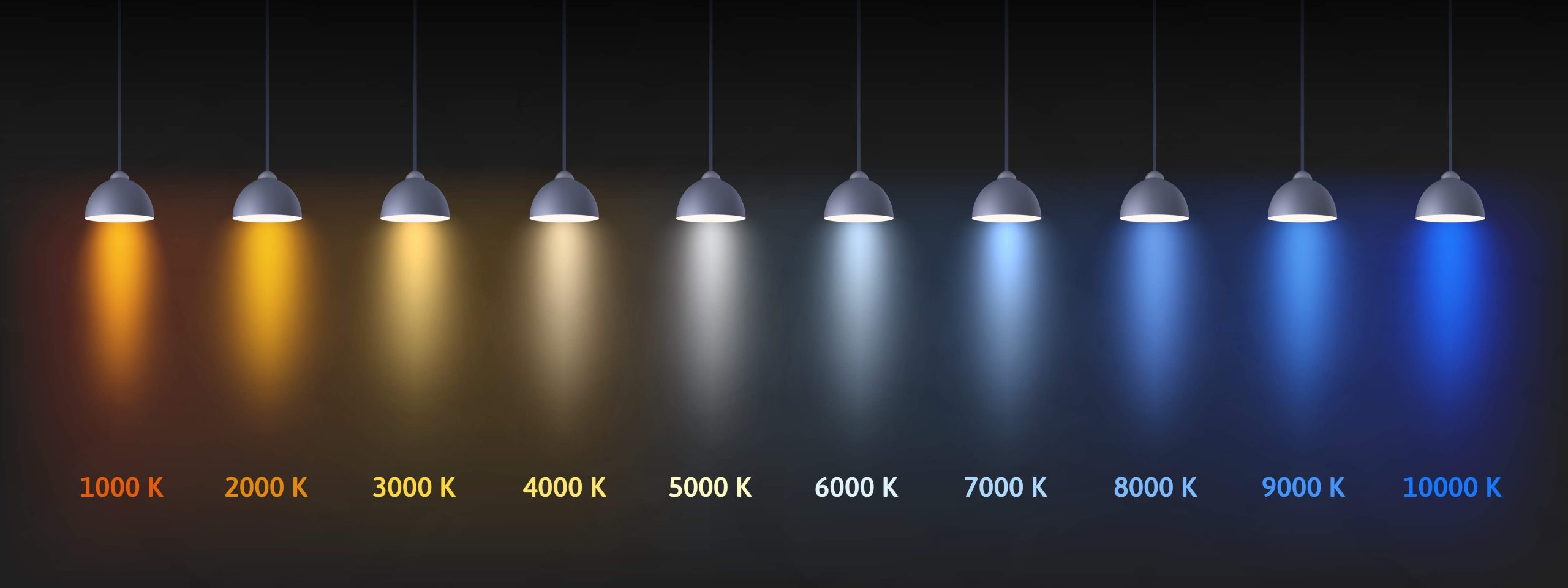
Color temperature is an indicator for measuring the degree of warmth or coldness of light color, expressed in K values (Kelvin). The lower the value, the more the light color tends toward the warmth of red-orange; the higher the value, the closer the light color is to the coldness of blue-white.
3000K (Warm White Light): This is the best choice for creating a home atmosphere, simulating the soft light of sunset at dusk. It is extremely suitable for bedrooms, living room areas, and dining rooms, as it can induce the brain to secrete melatonin, helping the body and mind enter a relaxed state and creating an ultimate sense of warmth.
4000K (Natural Light/Neutral Light): Closest to natural sunlight around 10 AM, the light color is intermediate between warm white and cold white, possessing a high sense of balance. It is suitable for installation in living rooms, study rooms, kitchen work areas, and bathrooms that require appropriate identification and a sense of freshness. It provides sufficient illumination while avoiding a light color that is too stark white, making it an ideal balance point for home working and daily washing.
6000K (Cold White Light): The light is strong and sharp, having a significant refreshing effect. It is usually applied in offices, precision repair rooms, or commercial spaces requiring high focus. In home environments, it should be used locally to avoid large-area configurations, so as not to cause visual hardness and coldness.
Learn More: Choosing The Right Color Temperature: An Designer’s Guide To Enhancing Your Home Lighting!
2. Color Rendering Index (CRI) Selection
The color rendering index (expressed as CRI or Ra) represents the ability of a light source to restore the true color of objects. The CRI of sunlight is defined as 100; the higher the value, the closer the color of an object under the light is to the truth.
Ra > 90: This is the basic threshold for modern LED home lighting, meeting basic illumination needs for general home spaces like ambient lighting, hallways, and storage rooms, ensuring a certain quality of home lighting.
Ra > 95 (High Color Rendering): This is essential for areas with high color requirements. It is recommended for dining areas (making ingredients look fresher and more inviting), in front of vanity mirrors (ensuring makeup colors are accurate without error), or in art display areas (faithfully presenting painting details). Choosing full spectrum light sources can effectively protect eyesight and reduce the burden of long-term eye use.

Learn More: CRI(Color Rendering Index)-Lighting terms and definitions
3. Suitable Ratio of Fixture Size to Space Size
If the size of the lighting fixture is out of proportion with the space, it will produce a severe sense of visual pressure or appear empty. Moderate proportion is the core principle of interior design.
Living Room and Public Areas: The floor height (ceiling height) must be considered. If the ceiling is lower than 2.8 meters, large or long-hanging crystal lamps should be avoided to prevent cutting off the spatial flow. In this case, choosing ceiling lights or recessed downlights can maximize visual height, making the sense of space more open.
Dining Area: The recommended diameter of the pendant light is 1/2 to 2/3 of the dining table width. Additionally, the lower edge of the pendant light should maintain a distance of 70 to 90 cm from the tabletop. This height not only gathers visual focus and illuminates delicious dishes but also avoids blocking the view of friends and family at the table during conversation.
Learn More: Lighting Size and Height Guide: Professional Specifications For Home Interiors!
4. Deep Matching of Fixtures and Interior Design Style
Lighting selection should be viewed as “furniture that glows,” not just providing illumination but serving as an important element in shaping spatial style. Beyond the shape needing to echo the overall design language, the detailed matching of materials and colors is equally critical. When fixtures can form a consistent visual vocabulary with furniture, building materials, and soft furnishing products, the space will appear more complete and designed, avoiding a split in style.
Material Extension: The material of the fixtures should connect with elements in the space. For example, when a space uses a lot of wood elements, fixtures with wood grain or warm-toned materials can be chosen to enhance the overall warmth. For modern minimalist style, glass, metal, or matte materials are suitable to present sharpness and purity. Through the echo of materials, fixtures can naturally integrate into the space.
Color Consistency: The color of the fixtures should be included in the overall spatial color planning. It is recommended to use basic colors such as black, white, gray, or wood color to avoid excessive color jumps that affect overall balance. If you want the fixture to be a visual focus, you can echo the same color through other soft furnishing products to make the design more holistic.
Style Consistency and Layer Stacking: The lighting style must be consistent with the interior design; for instance, Scandinavian style leans toward simple light colors, modern style emphasizes sharp lines, and light luxury style incorporates metal and exquisite details. Under a unified style, a spatial hierarchy can also be created through the combination of pendant lights, wall lights, and floor lamps, giving the overall design more depth and variation.
5. IP Rating and Safety Standards
For specific environments, the protection performance of lighting is just as important as the lighting aesthetic. The IP rating represents the fixture’s resistance to solid foreign objects (dust) and liquids (water).
Protection for Humid Spaces: In bathrooms, around kitchen sinks, or on semi-outdoor balconies, the protection coefficient of the fixtures must be strictly verified. For example, Mini IP waterproof downlights possess an IP44 protection rating, effectively preventing mist and splashing water from entering the internal circuitry. For bathroom ceilings where moisture easily accumulates, choosing fixtures with professional protection levels not only extends product life but also ensures the home electricity safety of the whole family.

Learn More: IP Ratings-Lighting Terms and Definitions
4. Common Home Lighting Recommendations
In the practice of interior design, the choice of lighting fixtures directly determines the quality of light and the soul of the space. With the rapid progress of LED technology, lighting has evolved from simple illuminating tools into precision instruments for spatial modeling. Below is a detailed analysis of current mainstream home lighting categories and their unique application values.
1. LED Downlights
Downlights are the foundation of modern interior lighting, characterized by the ability to perfectly hide the lamp body within the ceiling, maintaining spatial flatness and simplicity. According to optical design and functional needs, they can be further divided into four key types:
Full Spectrum Downlights: This is the highest realm of lighting technology. Full spectrum light sources simulate the continuous spectrum of sunlight, significantly reducing blue light peaks and making up for the long-wave red light beneficial to the human body. Being under full spectrum lighting for a long time can effectively reduce visual fatigue, stabilize emotions, and help indoor plants grow better. For families with school-aged children or those who need to read for long periods, full spectrum downlights are the first choice.
Anti-glare Downlgihts: The optical structure adopts a “recessed light source” design, making the light source deeply embedded within the lamp body. When walking in the space, unless looking directly under the lamp hole, the presence of the light source is almost unnoticeable. This “seeing the light but not the lamp” effect can maximize the elimination of eye discomfort caused by glare, creating a high-quality light environment like a five-star hotel.
Waterproof Downlights: Designed for bathroom spaces, kitchens, and semi-outdoor balconies. These fixtures feature professional-grade sealing rings and anti-corrosion shells. For example, Mini IP waterproof downlights have an IP44 rating, effectively isolating high-temperature water vapor common in bathrooms, preventing electronic components from rusting and short-circuiting, making them safety guardians in humid environments.
Diffused Downlights: The light-emitting surface is usually equipped with a frosted, milky-white diffusion plate, producing a large-area and uniform soft light. Suitable for hallways, dressing rooms, or basic illumination, they can quickly raise the average illuminance of the space, eliminating abrupt shadows and making the visual sense more transparent and open.
LED Downlights Ultimate Guide: Color Temperature, Wattage, Sizes, and Applications
Choosing Downlights Height And Size: Professional Specifications For Designers!
Downlight Buying Guide: Wattage, Sizes, Types, and Brightness Planning for Designers!


2. LED Profiles / LED Strip Lights
Linear lighting is the most important atmosphere makeup artist in modern “no main light design.” It completely breaks the limitations of traditional “point-like light emission.”
Application Scenarios: Led strip lights are often hidden within the layers of indirect lighting in the ceiling, with light falling on the walls after reflection, creating the gradient beauty of wall washing. Additionally, embedding light strips under storage cabinets, baseboards, or stair treads not only increases the sense of spatial depth but also serves as safety guidance lighting at night.
Selection Details: When purchasing, pay attention to lamp bead density and light source type. COB led strip lights and high-quality SMD light strips with high density emit light uniformly without producing a discontinuous “grainy feel.”
New guide line of led strip lights


3. Track Lights
Track lights originated in commercial display spaces. Because of their extremely high flexibility, they have become a favorite element in industrial and Scandinavian style residences in recent years.
Features: The greatest advantage of track lights lies in their ability to “move freely” and “rotate flexibly.” Regardless of future changes in furniture positions or a desire to change the projection position of a painting on the wall, it can be achieved simply by manually adjusting the lamp heads on the track.
Light Source Control: You can replace different angled reflectors according to your needs. For example, use a 15° narrow-angle spotlight to emphasize artwork, or use a 36° medium-angle light to supplement hallway brightness.


4. Magnetic Track Light
Magnetic track light is the darling of the interior design world in recent years, perfectly combining the flexibility of track lights with the simplicity of downlights.
Systematic Advantages: Its track uses low-voltage power supply (usually DC48V), which is extremely safe. The most charming part is its “modular” design: you can directly attach magnetic floodlights (uniform lighting), magnetic grating lights, magnetic spotlights, or magnetic pendant lights to the track at any time, and adjust positions manually without any tools.
Aesthetic Value: The ultra-narrow magnetic track can span the ceiling and walls, creating black lines full of geometric beauty, possessing great visual tension, and is very suitable for residents pursuing a sense of technology and modernity.


5. Ceiling Light / Surface Mounted Downlight
For spaces with limited ceiling height or where wooden hole-cutting cannot be performed, surface-mounted fixtures provide a solution that balances functionality and aesthetics.
Surface Mounted Downlight: If you prefer the projection feel of downlights but do not wish to tear down and modify the ceiling, surface mounted downlights are an excellent alternative. The appearance is sharp, like an exquisite metal cylinder hanging from the ceiling; not only is installation simple, but it can also showcase a minimalist hierarchy of Scandinavian or modern industrial style.
Ceiling Light: The shapes are varied and the light-emitting surface is wide, making it particularly suitable for bedrooms and children’s rooms. Modern smart ceiling lights mostly feature three-stage color temperature adjustment and remote dimming functions, allowing for atmosphere switching at any time according to life scenarios (reading, sleeping, leisure).


5. Conclusion
Lighting design is not just about picking a few good-looking fixtures; it is a profound art that combines rigorous optical theory, ergonomics, and life aesthetics. From the ultimate warmth pursued in Scandinavian style to the sharpness in modern minimalist style, every interior design style has its exclusive light and shadow vocabulary. The layout of light is like a makeup artist for the space, capable of modifying defects in architectural structures and magnifying the material merits in design.
Through precise color temperature selection, we are able to regulate heart rate and emotions at different moments; through persistence in color rendering index (CRI), we can find the emotion of the truest colors in life; and through the control of waterproof ratings and IP protection, we ensure that in the pursuit of beauty, home safety and functional performance are most properly guaranteed. The stacking of these details eventually makes the home no longer just a place to live for shelter, but a “temple of light and shadow” full of temperature that can truly wash away physical and mental fatigue and transform life stress.
When you set out to plan an interior design project, it is strongly suggested to list lighting design as a core consideration rather than a supporting role for post-remedy. Let appropriate home lighting and light and shadow layers weave moving melodies in the space, injecting a new soul and life into your home life. High-quality light deserves more of your time to feel and choose.
According to your own lifestyle and needs, you can further understand specific lighting configuration strategies for different areas (such as a study room requiring high focus, a kitchen emphasizing function and safety, or a bedroom requiring ultimate relaxation). The world of light and shadow is broad and profound. If you need more detailed lighting configuration planning, lighting specification list suggestions for specific space types, or want to further discuss how to draw professional lighting layout plans, please let me know at any time, and we will be dedicated to providing you with more professional consulting assistance.
View more interior design projects and interior design case studies
More Information:
Indirect Lighting Design Guide:Creating Luxurious Ambiance For Your Home | Interior Design
TOP 10 Interior design styles: Furniture Arrangement + Lighting Selection!
Top 10 LED Lighting Manufacturers in the World 【2025 updated】
American Interior Design|Home Lighting Design Tips Designers Recommend!
MUJI Interior Design|Home Lighting Design Tips Designers Recommend!
Industrial Interior Design|Home Lighting Design Tips Designers Swear By!
Modern Interior Design and Home Lighting: Interior Designers’ Top Tips for a luxury, Stylish Home!
Nordic Interior Design and Home Lighting: Interior Designers’ Top Tips for a Cozy, Stylish Home
Welcome to contact us for Indoor Lighting Design and Indoor Lighting procurement!
Website: https://tj2lighting.com
Whatsapp: +886 988147729
Phone: +886 4-2534-1768
E-mail: sales@tj2lighting.com
Line: @034wnuyy
| Recommend Indoor Lighting Fixtures


| Recommend Decorative Lighting


| Related Articles
-
Home Lighting Manufacturers and Suppliers | Bedroom Lighting Design/Bedroom Lighting Fixtures | Commercial Lighting | Home Lighting | Illumination in Practice | Indoor Lighting | Indoor Lighting Manufacturers and Suppliers | Living Room Lighting Design/Living Room Lighting Fixtures
Choosing Downlights Height And Size: Professional Specifications For Designers!
I. Introduction In the realm of contemporary space planning, the interplay of light and shadow is often the final key to determining…
-
Indoor Lighting | Bedroom Lighting Design/Bedroom Lighting Fixtures | Commercial Lighting | Home Lighting | Illumination in Practice | Indoor Lighting Manufacturers and Suppliers | LED Lighting Manufacturer | Living Room Lighting Design/Living Room Lighting Fixtures
Lighting Size and Height Guide: Professional Specifications For Home Interiors!
I. Introduction: The Key to Lighting Aesthetics—Precision in Fixture Specifications In the professional field of interior design, lighting configuration is never just…
-
Home Decor Styles/ Ideas | DIY Home Decor Ideas and DIY Projects | Home Lighting | Illumination in Practice | Indoor Lighting | Interior Design Projects and Case Studies | Nordic Interior Design/Scandinavian Interior Design Projects and Cases
Scandinavian Interior Design|5 Lighting Design Tips To Upgrade Your Home!
Introduction Scandinavian interior design is renowned for its simplicity, natural elements, and comfort, making it one of the most desirable home styles…


Download The New Lighting Catalogue
Our latest lighting catalogue has been released! Product lines include indoor, outdoor and commercial lighting items.
Try to get more product information for your projects and requirements. Contact us immediately!

TJ2 Lighting | led lighting manufacturer, lighting manufacturer in Taiwan
TJ2 specializes in indoor, commercial and outdoor lighting, including led downlights, ceiling lights, track lights, spotlights, wall lights, in-ground lights, bollards and downlight modules with various types of models and customized products available.
As a premier led lighting manufacturer and lighting supplier in Taiwan, we are dedicated to catering to a wide range of lighting demands.


