
Indirect Lighting Design Guide:Creating Luxurious Ambiance For Your Home | Interior Design

I. Introduction
In the area of interior design, color grants a space its personality, materials determine its tactile feel, but “indirect lighting” is the key to giving a space its soul. Many people, when planning home decor, often invest the majority of their budget and energy into purchasing furniture or executing hard decoration, yet overlook the importance of lighting design. In fact, an excellent designer emphasizes that light is not just for illumination; it is a core element for creating atmosphere, shaping spatial layers, and even influencing the psychological feelings of residents.
Traditional home lighting often relies on a single large light located in the center of the ceiling. This “one light for the whole house” approach, while solving basic brightness needs, easily creates dull light and harsh shadows, making the space appear bland and even exposing spatial flaws. With the rising demand for quality of life, modern interior design increasingly emphasizes concepts like “zoned point lighting,” “no main light design,” and “ambient lighting.” Among these, “indirect lighting” is undoubtedly the most magical and easiest design technique to enhance high-end home aesthetics.
Imagine walking into a top-tier boutique hotel or a minimalist high-end residence; you are rarely blinded by strong direct light. Instead, you are greeted by a soft, uniform warmth that seems to emanate from the space itself. This “see the light, not the lamp” aesthetic is precisely where the charm of indirect lighting lies. It is subtle yet omnipresent, quietly outlining the contours of the space and gently enveloping every corner of the home. This article will serve as your professional lighting design guide, analyzing the principles, application techniques, and purchasing points of indirect lighting in simple terms, leading you to experience the high-end home life woven by light and shadow.
Learn More:
11 Interior Design Styles and trends 2026: Popular Styles for designers and Architects!
Indoor Lighting / Home Lighting — Professional LED Lighting Manufacturer and Supplier
II. What is Indirect Lighting? Definition and the Principle of Soft Aesthetics
To utilize indirect lighting effectively, one must first understand its core principle. So-called “indirect lighting” is relative to “direct lighting,” which projects light sources directly onto the object.
The Core Principle of Indirect Lighting: Reflection and Diffusion
The definition of indirect lighting is very clear: hide the light source (usually LED strip lights, linear lights, or wall lights) within hard decoration structures (such as ceiling light troughs, wall moldings, or behind furniture) so that the light source is not directly exposed to the line of sight. After the light is emitted, it first hits reflective surfaces such as walls, ceilings, or the ground, and then spreads uniformly throughout the space after reflection and diffusion.
This process is similar to sunlight scattering through clouds; the light becomes soft, non-directional, and greatly reduces harsh glare.
Why Does Indirect Lighting Create a “High-End Feeling”?
The reason indirect lighting is regarded as a magic tool for creating high-end interior spaces stems from its unique impact on spatial vision and psychological perception:
- Eliminating Harsh Shadows and Creating a Soft Atmosphere: Direct lighting easily produces shadows with sharp edges, making a space feel rigid and cold. Indirect lighting, through diffuse reflection, distributes light evenly, greatly softening shadows and making the space feel warm, relaxing, and more inclusive. This softness is the visual effect most sought after by boutique hotels and high-end SPAs.
- Visual Expansion and Space Amplification: When light washes toward the ceiling or walls, these surfaces are “pushed away” or “pulled higher,” creating a sense of expansion visually. For urban residences with limited square footage, indirect lighting can effectively eliminate the oppression of small spaces, making the environment appear more open and grand.
- Emphasizing Material Textures: Many high-end hard decoration materials (such as artistic coatings, stone, or special grilles) may appear flat under direct light. Indirect lighting can adopt a “wall washing” method, letting the light graze the material surface to perfectly present the three-dimensional layers and delicate textures of the material.
- The Minimalist Aesthetic of Seeing Light but Not the Lamp: Modern design pursues simplicity. Hiding home lighting fixtures and leaving only pure light allows ceilings and walls to remain clean and sharp, reducing visual noise and naturally exuding a high-quality sense of design.

Interior Lighting Design Guide: Architect Lighting Concepts & 6 Essential Indoor Lighting Fixtures
III. 5 Major Indirect Lighting Design Techniques: Comprehensive Application from Ceiling to Floor
The application of indirect lighting is very flexible and is by no means limited to the ceiling. Below, we summarize the 5 core techniques for using indirect lighting in interior design to help you comprehensively enhance home layers.
1. Ceiling Indirect Lighting: Increasing Visual Height and Eliminating Oppression
This is the most classic and common method. The usual practice is to implement light troughs (commonly known as “cove lighting”) around the perimeter or in specific sections of the ceiling, hiding light tubes or LED strip lights inside, so light projects upward to the ceiling and reflects back down.
- Design Strategy: This method can effectively “pull up” the visual height of the ceiling. For oppressive beams and columns, using indirect lighting to wrap or outline them can eliminate their heavy feeling.
- Applicable Spaces: Living room, dining room, bedroom. Especially suitable for spaces with low floor heights or many beams and columns.
- Advanced Technique: Modern design often uses a “floating ceiling” design, creating a floating structure in the center of the ceiling with lights hidden around the perimeter, creating a light feeling as if the ceiling is floating in the air, full of high-end flair.

2. Wall and Gap Lighting: Utilizing Vertical Side Light to Emphasize Material Texture
Indirect lighting can glow not only upward but also sideways. This technique is often combined with wall molding design, hiding light sources in the gaps between the wall and decorative structures (such as grilles, stone background walls, or woodwork molding), creating vertical side light.
- Design Strategy: This is an excellent way to create a spatial focal point. When light grazes wall materials (such as stone with rough textures or three-dimensional grilles), it produces charming light and shadow changes, greatly enhancing the quality of the material.
- Applicable Spaces: TV background walls, entryway vistas, feature walls in dining rooms.
- Advanced Technique: Apply the “wall washing” concept, letting light uniformly cover an entire special coating wall, making the wall appear delicate and deep.

3. Furniture Edge Lighting: Bedroom Bed Backboards and Cabinet Shelves to Increase Furniture Three-Dimensionality and Buoyancy
Combining indirect lighting with furniture design is a major trend in modern lighting design.
- Bedroom Bed Backboards: Install hidden LED strip lights behind or above the headboard, with light reflecting toward the wall. This not only provides soft light for getting up at night but also creates a warm and relaxing pre-sleep atmosphere, which is much more high-end than direct table lamps.
- Cabinets and Display Shelves: Install LED strip lights under living room display cabinets, kitchen wall cabinets, or inside wardrobe shelves. This is not just functional lighting (easy to find things), but also makes the cabinets appear light and highlights the collections inside, creating a display feel akin to a boutique store.

4. Curtain Box Indirect Lighting: Creating a Wall-Washing Effect to Make Curtain Layers More Distinct
Many people overlook the excellent hidden light position of the curtain box. When constructing the curtain box, reserve light trough space to place LED strip lights, and light will cascade from top to bottom along the curtain fabric.
- Design Strategy: This method has an excellent “wall washing” effect. The light naturally outlines the folds and material layers of the curtain fabric, making ordinary curtains instantly high-end. Meanwhile, even when the curtains are drawn at night, it creates a gentle curtain of light by the window.
- Applicable Spaces: Living rooms, bedrooms, and other spaces equipped with curtain boxes.

5. Low-Position Kick-Line Lighting: Increasing Walkway Safety and Creating Spatial Layers
Indirect lighting can be applied not only at high and middle levels but also near the ground at low levels.
- Design Strategy – Safety: Install low-position indirect lighting in walkways, under stair steps, or under bathroom cabinets. At night, these lights can serve as guidance, providing enough brightness without being glaring, avoiding waking up sleepers—perfect for families with elderly members or children.
- Design Strategy – Buoyancy: Hide lights under suspended cabinet designs (such as entryway suspended shoe cabinets or bathroom suspended vanity cabinets). Light illuminating the ground creates the illusion that the cabinet is floating above the floor, making bulky cabinets appear light while increasing the three-dimensional layers of the space.

6. Translucent Stone Wall – Latest Decor Application: Creating a “Glowing Art Piece” in the Space
If ceiling lighting is for atmosphere, then the “translucent stone wall” is for creating the visual soul of a space. This is one of the most popular lighting design trends in high-end luxury homes and commercial spaces today, achieved by installing light sources behind the stone and using the stone’s natural texture to filter the light.
- Design Strategy – Backlight Aesthetics: Unlike previous methods where light was sprinkled on the stone surface, a translucent stone wall lets light project from the inside out. When the light is turned on, the crystals, cracks, and color layers inside the stone are thoroughly stimulated, presenting a deep sense like a landscape painting.
- Design Strategy – Heterogeneous Material Splicing: The latest decor applications often combine translucent stone with woodwork or metal edge strips, using vertical or geometric cut gaps to let light through, creating an exquisite detail as if “light is spilling from the wall cracks.”
- Applicable Spaces: Entryway vista walls, living room TV main walls, bar facades.
- Technical Points – Light Uniformity: One must carefully select suitable LED strip lights, including the type and light source density, to ensure that no obvious individual light strips (light spots) are seen after light transmission, maintaining the purity of the light and shadow.
- Technical Points – Maintenance and Heat Dissipation: The closed space behind the stone needs to consider heat dissipation issues and reserve access ports to facilitate the future replacement of power drivers.

IV. Purchase and Installation Points: A Professional Technical Guide to Avoid Pitfalls
Even with an understanding of design techniques, if the wrong hardware or installation method is chosen, the effect will be greatly diminished. Many failed indirect lighting cases (such as light being bright in one spot and dark in another, colors being too cold-white, or transformers humming) are due to overlooking these technical details.
1. Color Temperature Selection: Deciding the “Temperature” of the Space
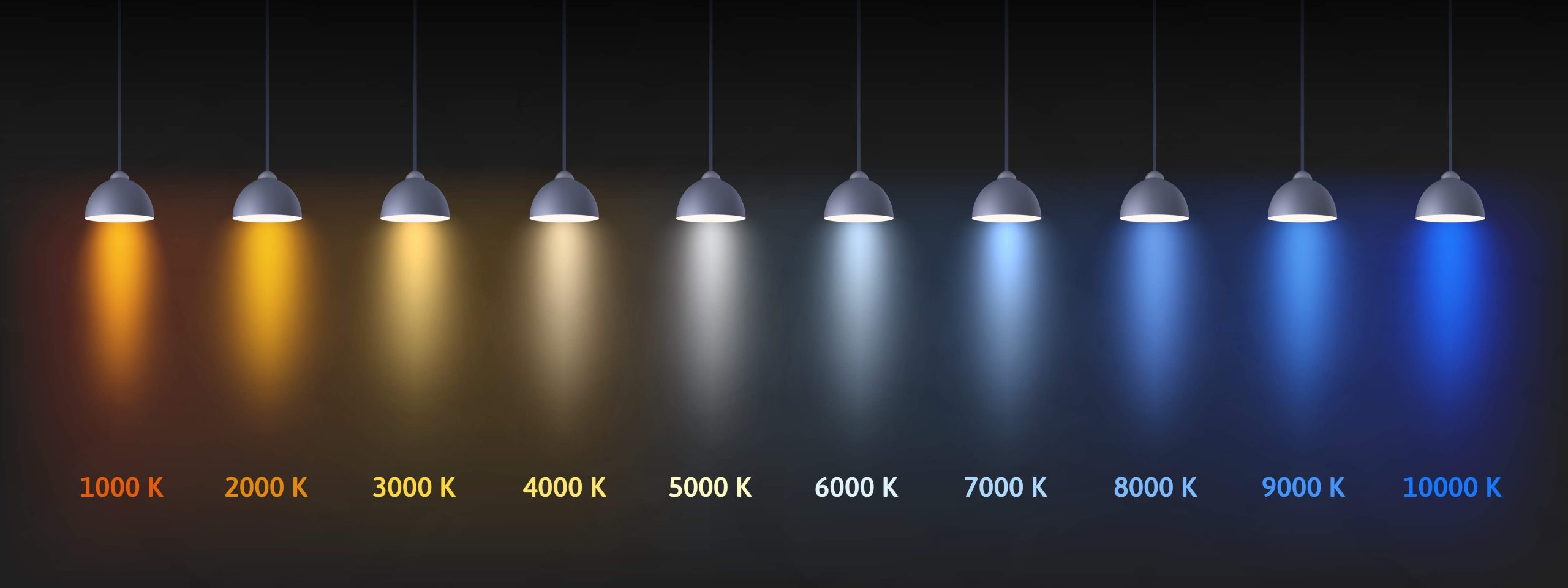
Color temperature is measured in K (Kelvin). The lower the color temperature, the warmer the light color (yellowish); the higher the color temperature, the colder the light color (bluish). The core of indirect lighting is to create an atmosphere, so color temperature selection is crucial.
- Recommended Color Temperature: 3000K (Warm White). This is the color temperature most capable of creating a warm, relaxing, and high-end feel, suitable for most home rest areas like living rooms, bedrooms, and dining rooms. It makes wooden furniture and warm-toned hard decorations appear more textured.
- Functional Spaces: 4000K (Natural Light). Suitable for kitchens, bathrooms, study rooms, or bookshelf layers. Natural light provides clearer vision and feels closer to daylight, making it suitable for areas requiring focus or color identification.
- Pitfall Guide: Home indirect lighting should try to avoid using white light above 6000K. This light color easily appears cold and rigid, running contrary to a “high-end feeling,” and may even make the space look like an office or hospital.
Learn More: Choosing The Right Color Temperature: An Designer’s Guide To Enhancing Your Home Lighting!
2. Color Rendering Index (CRI) Performance: Restoring the “True Color” of All Things
CRI (Ra) refers to a light source’s ability to restore the color of an object. The higher the Ra value, the closer the object looks to its true color under the light (with sunlight being Ra100).
- Professional Designer Recommendation: Choose LED strip lights with a high CRI of Ra>90.
- Why is Ra Important? Indirect lighting is often used to “wash” special hard decoration materials (like stone or wood grain) or illuminate boutique collections. If the CRI is insufficient (like common Ra70 or Ra80 strips on the market), a red dining table might look grayish, and expensive artistic coatings will look dirty, failing to showcase the original high-end texture of the material.

Learn More: CRI(Color Rendering Index)-Lighting terms and definitions
3. Installation Details: The Core Techniques that Determine Success
This is the part many people easily overlook, yet it is also the most common cause of failure.
This is the part many people easily overlook, yet it is also the most common cause of failure in lighting design. When considering light trough depth and distance, achieving light uniformity is paramount. Ceiling light troughs must not be designed too shallow, as insufficient depth will produce obvious jagged light spots or uneven illumination that detracts from the spatial quality. Professional designers will meticulously adjust the installation angle of the LED strip lights based on whether the reflection is intended for the ceiling or wall. This precision ensures that light can diffuse perfectly across the intended surface rather than being blocked by the structural edge of the light trough.
The management of reflective surfaces is another critical factor in avoiding glare issues. If the primary reflection surface for indirect lighting consists of high-gloss polished tile or a mirror-like finish, the LED strip lights are highly likely to reflect directly onto the surface. This creates a stringing phenomenon, characterized by countless visible LED light points, which completely destroys the high-end feel of the interior design. To solve this, designers recommend using matte or satin materials for reflective surfaces, such as matte stone or flat-finish paint. Furthermore, choosing COB LED strip lights is an effective strategy, as this specific type of strip provides inherently uniform linear light that is far less likely to reveal individual light dots upon reflection.
Finally, the strategic storage of the transformer, or driver, is essential for long-term maintainability. These components must be hidden in concealed areas that remain easily accessible, such as inside ceiling access ports or cabinet interiors. They should never be permanently sealed within hard decoration structures. Because the lifespan of a transformer is usually shorter than that of the LED strip lights, failing to provide an access point creates a dilemma where one might eventually need to destroy the decor just to perform a simple replacement. Selecting high-quality transformers and ensuring they are placed in a well-ventilated, reachable location will significantly extend the service life and functional integrity of the home lighting system.
Learn More: New guide line of led strip lights
V. Conclusion: Lighting Design, a Worthwhile Investment in Home Quality
In this era of pursuing “light renovation, heavy decoration,” lighting design is undoubtedly the part with the highest return on investment. Indirect lighting, with its unique soft aesthetics, successfully achieves the high-end visual experience of “seeing the light but not the lamp.” It is not just about illuminating a space; it is about using the magic of light and shadow to grant a space depth, temperature, and layers.
Through the 5 major design techniques of ceiling, wall, furniture, curtain box, and kick-line applications introduced in this article, combined with professional control over color temperature, CRI, and installation details, you can easily master the golden key to creating a high-end home atmosphere.
Indirect lighting is no longer the exclusive property of top-tier luxury homes. A smart homeowner knows that choosing the right home lighting and pairing it with professional lighting design concepts can, even with a limited budget, make an ordinary home instantly transform through the clever arrangement of light.
View more interior design projects and interior design case studies
More Information:
TOP 10 Interior design styles: Furniture Arrangement + Lighting Selection!
Top 10 LED Lighting Manufacturers in the World 【2025 updated】
American Interior Design|Home Lighting Design Tips Designers Recommend!
MUJI Interior Design|Home Lighting Design Tips Designers Recommend!
Industrial Interior Design|Home Lighting Design Tips Designers Swear By!
Modern Interior Design and Home Lighting: Interior Designers’ Top Tips for a luxury, Stylish Home!
Nordic Interior Design and Home Lighting: Interior Designers’ Top Tips for a Cozy, Stylish Home
Welcome to contact us for Indoor Lighting Design and Indoor Lighting procurement!
Website: https://tj2lighting.com
Whatsapp: +886 988147729
Phone: +886 4-2534-1768
E-mail: sales@tj2lighting.com
Line: @034wnuyy
| Recommend Indoor Lighting Fixtures


| Related Articles
-
Home Lighting Manufacturers and Suppliers | Bedroom Lighting Design/Bedroom Lighting Fixtures | Commercial Lighting | Home Lighting | Illumination in Practice | Indoor Lighting | Indoor Lighting Manufacturers and Suppliers | Living Room Lighting Design/Living Room Lighting Fixtures
Choosing Downlights Height And Size: Professional Specifications For Designers!
I. Introduction In the realm of contemporary space planning, the interplay of light and shadow is often the final key to determining…
-
Indoor Lighting | Bedroom Lighting Design/Bedroom Lighting Fixtures | Commercial Lighting | Home Lighting | Illumination in Practice | Indoor Lighting Manufacturers and Suppliers | LED Lighting Manufacturer | Living Room Lighting Design/Living Room Lighting Fixtures
Lighting Size and Height Guide: Professional Specifications For Home Interiors!
I. Introduction: The Key to Lighting Aesthetics—Precision in Fixture Specifications In the professional field of interior design, lighting configuration is never just…
-
Home Decor Styles/ Ideas | DIY Home Decor Ideas and DIY Projects | Home Lighting | Illumination in Practice | Indoor Lighting | Interior Design Projects and Case Studies | Nordic Interior Design/Scandinavian Interior Design Projects and Cases
Scandinavian Interior Design|5 Lighting Design Tips To Upgrade Your Home!
Introduction Scandinavian interior design is renowned for its simplicity, natural elements, and comfort, making it one of the most desirable home styles…


Download The New Lighting Catalogue
Our latest lighting catalogue has been released! Product lines include indoor, outdoor and commercial lighting items.
Try to get more product information for your projects and requirements. Contact us immediately!

TJ2 Lighting | led lighting manufacturer, lighting manufacturer in Taiwan
TJ2 specializes in indoor, commercial and outdoor lighting, including led downlights, ceiling lights, track lights, spotlights, wall lights, in-ground lights, bollards and downlight modules with various types of models and customized products available.
As a premier led lighting manufacturer and lighting supplier in Taiwan, we are dedicated to catering to a wide range of lighting demands.


