
LED Downlight Guide: 5.5–15cm Sizes & Selection Tips|TJ2 Lighting

I. Introduction: How to Choose LED Downlights? Understand Sizes and Lighting Specifications to Create Your Ideal Home
In home decor and interior design, LED downlights are a popular choice that combines practical lighting functions with aesthetic appeal. Whether the style is modern minimalist, Japanese natural, light luxury, or no main light design that emphasizes clean ceiling lines, different downlight sizes, beam angles, and anti-glare structures can be used to create lighting effects that meet everyday needs. Compared with pendant lights and ceiling lights with more prominent designs, downlights can be concealed within the ceiling to maintain a clean visual appearance. They can also be arranged according to the needs of different areas to provide general lighting, supplementary lighting, and accent lighting, enhancing the layers and practicality of overall home lighting.
When selecting LED downlights, it is important to look beyond appearance, price, or wattage. Other factors to consider include cutout size, luminous flux, color temperature, color rendering index, beam angle, anti-glare design, and heat dissipation performance. Among common specifications, compact 5.5 cm downlights are suitable for spaces that prioritize a clean ceiling appearance, localized lighting, and refined lighting effects. Downlights measuring 7.5–9.5cm can be used in living rooms, bedrooms, and hallways according to brightness requirements, anti-glare needs, and beam angles. Downlights measuring 12–15cm can be evaluated according to ceiling cutout conditions, light distribution characteristics, and the required lighting coverage. Mini downlights are also suitable for cabinets, display shelves, and small display areas. It is important to note that downlight size does not directly determine actual brightness. Suitability must still be assessed by considering luminous flux, light distribution, installation height, and product specifications.
For homeowners, understanding the characteristics and applications of different downlight sizes makes it easier to plan lighting during the early stages of home renovation. For interior designers, integrating ceiling structures, furniture layouts, lighting requirements, and visual comfort is essential to ensuring that lighting becomes a natural part of the overall design. This article explores recommended LED downlight specifications from 5.5 to 15 cm, outlines the applications and selection considerations for different sizes, and introduces practical uses for mini downlights. It will help you understand differences in downlight sizes, product specifications, and installation requirements, reducing the risk of discovering after purchase that the fixtures are incompatible with on-site conditions.
Taking TJ2 Lighting products as examples, homeowners looking to reduce glare in living rooms and bedrooms can consider HIDE anti-glare downlights. Those who prioritize accurate color rendering for furniture, leather, wood, and decorative items can learn more about ARC/ARC-S full spectrum downlights. For bathrooms and other areas exposed to moisture or possible water splashes, MINI-IP waterproof downlights can be evaluated according to the installation location and required protection rating. If the space needs to highlight specific objects or allows flexible adjustment of the light direction, SCOUT retractable downlights may also be worth considering. Different products suit different applications. Before purchasing, always confirm the cutout size, luminous flux, beam angle, protection rating, and complete product specifications to find a lighting solution that genuinely meets the needs of the space.
Learn More:
Indoor Lighting Buying Guide: Lighting Types, Selection Tips, and Applications
Home Lighting Guide: All Types, selection and Applications For Designers!
Indoor Lighting / Home Lighting — Professional LED Lighting Manufacturer and Supplier
II. LED Downlight Size Guide: Comparing 5.5–15 cm Specifications, with TJ2 Lighting Helping You Plan the Ideal Lighting Solution
When planning LED downlights, it is advisable to first confirm the reserved ceiling cutouts, then select suitable fixtures based on the purpose of the space, lighting coverage, and installation conditions. Small downlights are generally suitable for areas that prioritize a clean ceiling appearance, supplementary lighting, and accent lighting. Medium and large downlights can be evaluated for broader ambient lighting according to their luminous flux, beam angles, and light distribution characteristics.
One important concept to understand when choosing downlights is that downlight size does not equal lighting brightness. Even if two fixtures have the same cutout size, they may produce different lighting effects because of differences in wattage, light source efficiency, optical structure, and beam angle. Therefore, the following sections organize relevant TJ2 Lighting products and their applications according to common downlight sizes. For actual purchases, always refer to the manufacturer’s specifications, dimension drawings, and on-site installation conditions.
※ If you have any questions about LED downlight recommendations, downlight sizes, or product specifications, feel free to add our official LINE account @857mcksk or call us at [04-2534-1768]. Our team will be happy to help you evaluate suitable fixtures and lighting solutions.
| Recommended Need | Recommended Model | Key Selection Considerations | Suggested Applications |
|---|---|---|---|
| Prioritizing glare control and visual comfort | HIDE anti-glare downlights | Recessed light source, anti-glare structure, cutout specifications | Living rooms, bedrooms, or general interior space |
| Enhancing the color rendering of furniture and materials | ARC/ARC-S full spectrum downlights | Color rendering index, color temperature, beam angle | Living rooms, furniture display areas, or spaces which focus on lighting quality |
| Requiring splash protection | MINI-IP waterproof downlights | IP44 protection rating, installation location | Indoor areas that meet the protection requirements |
| Adjusting the direction of light | SCOUT retractable downlights | Adjustable angle, light distribution characteristics, installation conditions | Feature walls, display cabinets |
| Prioritizing convenient light source replacement | LEGO LED downlights | Compatible light sources, maintenance methods, cutout size | General residential space |
| Enhancing localized cabinet lighting | Mini downlights | Cutout size, wattage, installation depth | Kitchen wall cabinets, display cabinets |
1. Recommended 5.5cm Downlights: Small Cutouts with Anti-Glare Design for Refined Lighting Effects
Downlights with a 5.5cm cutout are suitable for residential designs that emphasize clean ceiling lines and attention to detail. Compared with fixtures with larger trims, smaller cutouts reduce the visual presence of lighting fixtures on the ceiling. They are particularly suitable for modern minimalist interiors, no main light design, and areas where furniture, feature walls, or display objects need to stand out. When combined with a deep anti-glare structure and a suitable beam angle, these compact fixtures can create layered lighting effects despite their small size.
▎HIDE Anti-Glare Downlights: Reduce Direct Exposure to the Light Source While Maintaining Everyday Visual Comfort
HIDE anti-glare downlights feature a recessed light source and narrow trim. Their fixture structure helps reduce direct glare from certain viewing angles, making them suitable for living rooms, bedrooms, and other spaces where people spend extended periods. Compared with fixtures whose light sources are more directly exposed to the viewer’s line of sight, deep anti-glare designs place greater emphasis on visual comfort from different viewing angles. They are particularly suitable for areas around sofas and beds, where people may frequently look up toward the ceiling.
Downlight Specifications: 5.5 cm cutout size, 7W power, CRI 90, 36° beam angle, available in 3000K and 4000K color temperatures, with ±24° adjustable aiming. Optional specifications with smart lighting and tunable white functions may also be available upon inquiry.


▎MINI-IP Waterproof Downlights: Compact Design with IP44 Protection
MINI-IP waterproof downlights feature a 5.5cm cutout, an all-aluminum alloy body, and an IP44 protection rating. They are suitable for indoor lighting plans that require splash protection. If the fixtures are intended for bathrooms or other humid environments, their suitability must still be verified according to the exact installation location, the likelihood of water splashes reaching the fixture, and applicable electrical safety regulations. An IP44 rating alone does not mean that a fixture is suitable for every shower area.
Downlight Specifications: 5.5 cm cutout size, 7W power, CRI 90, 36° beam angle, available in 3000K and 4000K color temperatures, IP44 protection rating.


▎ARC-S 55 Full Spectrum Downlights: Reveal the Natural Colors of Furniture and Building Materials
ARC-S 55 full spectrum downlights feature a 5.5 cm cutout and a high CRI of 98, making them suitable for residential spaces where furniture quality, material textures, and color accuracy are important. The product is available in 3000K, 4000K, and 5700K color temperatures, allowing users to evaluate the appropriate specifications according to the interior style and lighting purpose. It is particularly suitable for feature furniture, display walls, and areas where material details need to be emphasized.
Downlight Specifications: 5.5 cm cutout size, 7W power, CRI 98, 36° beam angle, available in 3000K, 4000K, and 5700K color temperatures, featuring an original U.S.-manufactured COB LED full spectrum chip. Smart lighting and tunable white functions can be discussed further upon inquiry.


▎SOMA-P 55 Focus Downlights: Highlight Specific Objects and Create Visual Focal Points
SOMA-P 55 focus downlights are suitable for localized lighting applications that require concentrated light, such as display cabinets, feature walls, and areas around decorative objects. The product features a 7W specification, CRI 90, and a 24° beam angle, allowing light to be concentrated on a designated area. If broader lighting coverage is desired, a 36° beam angle may also be considered, subject to the available product specifications, to better match the lighting effect with the furniture layout.
Downlight Specifications: 5.5 cm cutout size, 7W power, CRI 90, 24° beam angle, available in 3000K and 4000K color temperatures.


>>Looking For More 5.5cm Downlights
2. Recommended 7.5cm Downlights: Practical Options for Both Ambient Lighting and Accent Lighting
Downlights with a 7.5cm cutout offer considerable flexibility. Multiple fixtures can be combined to provide general residential lighting, while adjustable-angle designs can direct light toward walls, furniture, or display objects. For homeowners who want to balance a clean ceiling appearance, effective lighting, and flexibility in interior design, this size is worth considering.
▎HIDE Anti-Glare Downlights: Suitable for No Main Light Design That Prioritizes Visual Comfort
The goal of no main light design is not to install as many downlights as possible. Instead, each fixture should serve a specific purpose while maintaining a balance between brightness, lighting layers, and visual comfort. HIDE anti-glare downlights feature a recessed light source and narrow trim, helping reduce direct glare from certain viewing angles. They are suitable for everyday activity areas such as living rooms, hallways, and bedrooms.
Downlight Specifications: 7.5cm cutout size, 7W/10W power, CRI 90, 36° beam angle, available in 3000K and 4000K color temperatures, with ±24° adjustable aiming. Smart lighting and tunable white functions can be discussed further upon inquiry.
▎ARC Full Spectrum Downlights: Enhance Color Rendering for Furniture, Artwork, and Interior Materials
ARC full spectrum downlights feature a high CRI of 98, making them suitable for interior spaces where color accuracy and material details matter. If a living room features a statement sofa, decorative art objects, designer furniture, or specialty finishes, fixtures can be positioned according to the location of each object and the lighting objective. This helps leather, wood veneer, and other decorative materials display their colors and textures more naturally.
Downlight Specifications: 7.5cm cutout size, 12W power, CRI 98, 36° beam angle, available in 3000K, 4000K, and 5700K color temperatures, featuring an original U.S.-manufactured COB LED full spectrum chip. Smart lighting and tunable white functions can be discussed further upon inquiry.
▎MINI-IP Waterproof Downlights: Incorporate Protection Requirements into Residential Lighting Plans
MINI-IP waterproof downlights feature an all-aluminum alloy body and an IP44 protection rating. Depending on the installation location, they can be considered for bathroom-adjacent areas or other indoor spaces that meet the required protection conditions. When selecting fixtures, interior designers should verify not only the downlight cutout size but also moisture levels, potential water splashes, and applicable electrical regulations. Installation locations should not be determined solely by fixture dimensions or protection labels.
Downlight Specifications: 7.5cm cutout size, 7W/10W power, CRI 90, 36° beam angle, available in 3000K and 4000K color temperatures, IP44 protection rating.
▎SCOUT Retractable Downlights: Flexibly Adjust the Light Direction to Suit Display Needs
SCOUT retractable downlights are suitable for areas where visual focal points need to be emphasized, such as console cabinets, display walls, decorative paintings, and statement furniture. The adjustable fixture head allows light to be directed toward specific locations, providing appropriate brightness and depth for displayed objects instead of illuminating every area in the same way.
Downlight Specifications: 7.5cm cutout size, 10W power, CRI 90, 36° beam angle, available in 3000K and 4000K color temperatures, with ±90° adjustable aiming and 360° rotation. Smart lighting and tunable white functions can be discussed further upon inquiry.


>>Looking for More 7.5cm Downlights
3. Recommended 8.5cm Downlights: LEGO LED Downlights for Flexible Light Source Replacement and Installation
▎LEGO LED Downlights: Choose Between 7W, 10W, and 13W According to Lighting Requirements
LEGO LED downlights feature a Ø8.5cm cutout and are available in three power options: 7W, 10W, and 13W. The appropriate model can be evaluated according to room size, installation height, and lighting purpose. The 7W version may be suitable for supplementary lighting or localized illumination, while the 10W and 13W versions can be assessed for general lighting according to actual luminous flux, fixture spacing, and illuminance requirements.
In terms of color temperature, the product is available in 3000K warm white and 4000K natural white. The 3000K option is suitable for bedrooms, relaxation areas, and spaces that call for a warm atmosphere. The 4000K option is suitable for living rooms, dining rooms, and kitchens where both comfort and clear visibility are important. By selecting appropriate color temperatures for different areas, homeowners can create a more harmonious home lighting scheme that reflects each space’s function.
Greater Flexibility in Light Source Replacement for Easier Maintenance
LEGO LED downlights can be paired with HUGO light source modules and support compatible GU10 bulbs and MR16 light sources, offering flexibility in light source selection and maintenance. For homeowners who want to reduce future maintenance burdens, replaceable light sources are worth considering when selecting downlights. However, before replacing a light source, always confirm the fixture structure, light source dimensions, voltage, and electrical compatibility, and choose suitable accessories according to the manufacturer’s requirements.
Narrow Trim and Adjustable Aiming for More Flexible Lighting Layouts
These downlights feature a narrow trim design that reduces the visual presence of the fixture on the ceiling after installation, making them suitable for modern homes that emphasize clean, streamlined lines. The recessed structure can be paired with accessories such as honeycomb louvers to further reduce glare from certain viewing angles. The fixture also supports ±45° aiming adjustment, allowing light to be directed toward walls, cabinets, or display objects as needed, increasing flexibility in accent lighting layouts.
In addition, the quick-connect design can help improve installation and maintenance efficiency. For interior designers, downlight selection should consider not only the visual effect after installation but also light source replacement, installation convenience, and long-term maintenance requirements. This helps ensure that lighting design balances aesthetics, practicality, and flexibility.


4. Recommended 9cm Downlights: Retractable Spot Lighting and Diffused Lighting for Different Needs
Downlights with a 9cm cutout can be evaluated for general lighting or supplementary lighting according to their actual cutout specifications, luminous flux, and light distribution. If a space needs sufficient ambient brightness while maintaining a three-dimensional appearance for furniture or display objects, fixtures with different beam angles and light distribution characteristics can be combined to create a more layered lighting effect rather than simply increasing the number of downlights.
▎SCOUT Retractable Downlights: Highlight Walls, Cabinets, and Statement Furniture
SCOUT retractable downlights are suitable for accent lighting on decorative walls, display cabinets, artwork, and statement furniture. Designers can adjust the light according to the location of the object and the viewing direction, concentrating the beam on the area that needs emphasis while avoiding direct light toward people sitting on sofas or other seating areas. This improves both lighting practicality and visual comfort.
Downlight Specifications: 9cm cutout size, 13W power, CRI 90, 36° beam angle, available in 3000K and 4000K color temperatures, with ±90° adjustable aiming and 360° rotation. Smart lighting and tunable white functions can be discussed further upon inquiry.
▎FLAT Diffused Downlights: Expand Light Coverage and Supplement Ambient Brightness
FLAT diffused downlights are suitable for spaces that prioritize general lighting and an even distribution of light. Compared with narrow-beam downlights designed for concentrated illumination, diffused models focus more on expanding light coverage. Depending on their actual light distribution characteristics, they can be evaluated for kitchens, hallways, and other areas requiring general lighting. The all-aluminum fixture body helps conduct and dissipate heat, while the ultra-slim structure can also be considered when ceiling installation depth is limited.
Downlight Specifications: 9 cm cutout size, 9W power, CRI 90, available in 3000K, 4000K, and 6500K color temperatures.


>>Looking for More 9cm Downlights
5. Recommended 9.5cm Downlights: Comparing Deep Anti-Glare, Full Spectrum, and Waterproof Features
Downlights with a 9.5cm cutout cover a range of lighting applications, including deep anti-glare, high color rendering, waterproof, and glare-control designs. When selecting a fixture, first identify the primary lighting requirements of the space, then determine the most suitable type. For example, glare control can be prioritized in living rooms and bedrooms, color rendering can be emphasized in furniture display areas, and protection ratings and installation locations should be key considerations in bathrooms and similar spaces.
▎HIDE Anti-Glare Downlights: Reduce Glare and Improve Visual Comfort at Home
HIDE anti-glare downlights are suitable for living rooms, bedrooms, and other spaces where people spend extended periods. The recessed light source and narrow trim help reduce direct glare from certain viewing angles while maintaining a clean ceiling appearance. In homes featuring no main light design, these fixtures can be considered for areas around sofas, relaxation zones, and other locations where both brightness and visual comfort are important.
Downlight Specifications: 9.5cm cutout size, 10W/13W/15W power, CRI 90, 36° beam angle, available in 3000K and 4000K color temperatures, with ±24° adjustable aiming. Smart lighting and tunable white functions can be discussed further upon inquiry.
▎ARC Full Spectrum Downlights: Highlight the Details of Furniture and Interior Materials
ARC full spectrum downlights are suitable for residential environments where the color appearance of furniture, walls, and decorative items is important. High color rendering helps reveal color differences under illumination, making these fixtures particularly suitable for wood veneer, leather, fabric, and other materials with fine textures. If a design emphasizes furniture quality or soft furnishing details, these fixtures can be incorporated into the lighting plan, with their aiming direction arranged according to furniture placement and beam angle.
Downlight Specifications: 9.5cm cutout size, 12W/15W power, CRI 98, 36° beam angle, available in 3000K, 4000K, and 5700K color temperatures, featuring an original U.S.-manufactured COB LED full spectrum chip. Smart lighting and tunable white functions can be discussed further upon inquiry.
▎MINI-IP and MIST Curved Waterproof Downlights: Evaluate Protection Requirements According to the Installation Location
MINI-IP waterproof downlights and MIST curved waterproof downlights can both be considered for lighting plans that require protection, subject to their respective product specifications. If they are intended for bathrooms or other environments exposed to moisture, check not only the cutout size, wattage, and beam angle but also the protection rating, exact installation location, and relevant electrical safety regulations to ensure that the fixtures are suitable for the intended environment.
Downlight Specifications: MINI-IP waterproof downlights feature a 9.5 cm cutout, 10W power, CRI 90, and a 36° beam angle. They are available in 3000K and 4000K color temperatures and have an IP44 protection rating. MIST curved waterproof downlights feature a 9.5 cm cutout, 15W power, CRI 90, and a 60° beam angle. They are available in 3000K and 4000K color temperatures and have an IP44 protection rating.


▎RAYS Anti-Glare Downlights: Balance Lighting Layout and Everyday Visual Comfort
RAYS anti-glare downlights can be considered for residential lighting plans that prioritize visual comfort. During planning, fixture positions can be arranged according to light distribution characteristics, installation height, and furniture placement to avoid directing light straight into the user’s line of sight and to create an ambient brightness distribution that better suits everyday needs. The product supports 30° aiming adjustment to change the direction of illumination as needed. Its finned heat dissipation structure also helps dissipate heat from the fixture, although actual performance should still be evaluated according to installation conditions and product specifications.
Downlight Specifications: 9.5cm cutout size, 9W power, CRI 90, 36° beam angle, available in 3000K, 4000K, and 6500K color temperatures, with 30° adjustable aiming.


>>Looking for More 9.5cm Downlights
6. Recommended 12cm Downlights: Plan According to Lighting Coverage and Protection Requirements
Downlights with a 12cm cutout can be evaluated for living rooms, hallways, and other spaces requiring a certain level of lighting coverage, depending on their luminous flux, beam angle, and fixture design. When choosing larger LED downlights, actual optical specifications and illuminance requirements should remain the primary criteria. The ceiling cutout, fixture depth, and heat dissipation space must also be checked to ensure that installation conditions are suitable.
▎CANYON LED Downlights: Arrange Fixtures According to the Space’s Illuminance Requirements
CANYON LED downlights can be considered among the lighting options in the 12cm size category. When planning a layout, interior designers should first establish the required illuminance for the space, then evaluate the effective coverage of each fixture according to luminous flux, beam angle, and intended installation position. A larger downlight should not automatically be assumed to be brighter or sufficient for all general lighting needs. The product features an integrated all-aluminum design that helps conduct and dissipate heat from the fixture body. Actual service life still depends on product design and operating conditions.
Downlight Specifications: 12cm cutout size, 15W power, CRI 90, 36° beam angle, available in 3000K and 4000K color temperatures.


▎MIST Curved Waterproof Downlights: Check Environmental Protection Requirements When Selecting Fixtures
MIST curved waterproof downlights can be evaluated for the intended installation environment according to the actual product specifications. If they are planned for bathrooms or other areas exposed to moisture, check the protection rating, installation location, ceiling structure, and future maintenance conditions to ensure that the lighting layout is both safe and practical.
Downlight Specifications: MIST curved waterproof downlights feature a 12cm cutout, 20W power, CRI 90, and a 60° beam angle. They are available in 3000K and 4000K color temperatures and have an IP44 protection rating.
>>Looking for More 9.5cm Downlights
7. Recommended 15cm Downlights: Combine Light Distribution and Anti-Glare Design to Improve Overall Lighting Quality
Downlights with a 15cm cutout offer a larger-size lighting option. Their suitability for general ambient lighting can be evaluated according to luminous flux and light distribution. If a space needs sufficient brightness without creating overly bright areas or exposing occupants to direct glare, the selection process should consider not only downlight size but also fixture quantity, installation spacing, ceiling height, and how the fixtures work with other light sources.
▎RAYS Anti-Glare Downlights: Balance Ambient Brightness and Visual Comfort
RAYS anti-glare downlights can be incorporated into lighting plans for living rooms and other spaces that need to balance lighting performance with visual comfort. With appropriate fixture placement and adjustments to the beam direction, the likelihood of light shining directly into the user’s line of sight can be reduced. The lighting effect can also be tailored to furniture arrangements and daily activities.
Downlight Specifications: 15cm cutout size, 15W power, CRI 90, 36° beam angle, available in 3000K, 4000K, and 6500K color temperatures, with 30° adjustable aiming.
▎FLAT Diffused Downlights: Add Flexibility to Ambient Lighting Across Larger Areas
Depending on their actual light distribution characteristics, FLAT diffused downlights can be evaluated for spaces requiring broader light coverage. If a room already features pendant lights, indirect lighting, or other supplementary light sources, diffused downlights can also help fill in ambient brightness, allowing different fixtures to serve their respective lighting functions. According to their specifications, these products can be evaluated for residential and retail spaces, but luminous flux, light distribution, and installation conditions must still be checked against the actual requirements.
Downlight Specifications: 15cm cutout size, 9W power, CRI 90, available in 3000K, 4000K, and 6500K color temperatures.
>>Looking for More 12cm Downlights
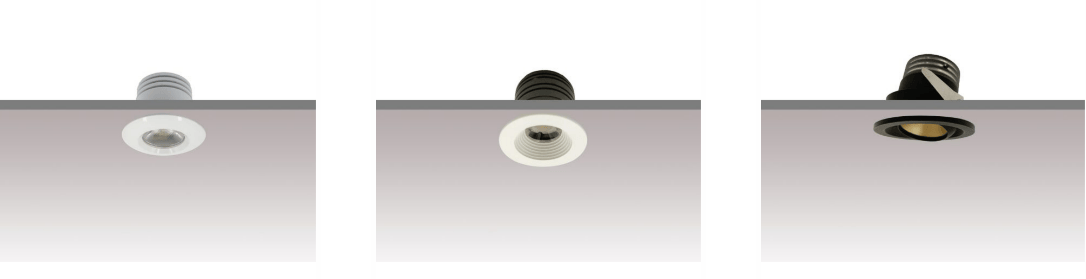
8. Recommended Mini Downlights Under 5cm: Refined Supplementary Lighting for Cabinets and Display Cases
Common cutout sizes for mini downlights include Φ3cm and Φ4.5cm, with power ratings of approximately 2W–3W. Their main advantages are their compact size and low visual presence after installation, making them suitable for cabinets, display cases, and localized furniture lighting. Although the luminous flux of an individual fixture is generally lower, careful positioning based on object placement, cabinet depth, and actual usage can still improve localized illumination, make spatial details easier to see, and add depth to the overall design.
Kitchen Cabinet Lighting: Supplement the Light on Worktops
Installing mini downlights beneath kitchen wall cabinets can enhance localized illumination on worktops and reduce shadows caused when the user’s body or cabinetry blocks ceiling light. For everyday tasks such as food preparation, cooking, and cleaning, suitable supplementary lighting improves visibility during work, making ingredients, utensils, and work areas easier to identify. During installation, cabinet depth, fixture heat dissipation, and power supply arrangements must still be checked.
Display Cabinet and Furniture Lighting: Highlight Material Quality and Three-Dimensional Details
Mini downlights can be installed in display cabinets to illuminate collectibles, decorative ornaments, and statement furniture, allowing selected objects to become natural visual focal points. By also considering color temperature, color rendering, and beam direction, it is possible to reveal the colors and surface qualities of different materials, including wood, leather, metal, and glass. Mini downlights are primarily intended for localized supplementary and display lighting. They should not directly replace the general lighting of an entire space without an illuminance assessment. Combining them appropriately with other fixtures helps interior design achieve both aesthetic appeal and practical functionality.
>>Looking for More Mini Downlights
III. Designer’s Guide to Choosing LED Downlights: 7 Key Lighting Factors
There is a wide variety of LED downlights on the market, but the factors that truly affect lighting quality go far beyond fixture appearance and downlight size. From a professional interior design perspective, lighting selection must take into account the function of the space, furniture placement, usage habits, and overall lighting layout to achieve a balance between brightness, visual comfort, and aesthetic appeal. The following seven key considerations will help you establish a clear direction when choosing LED downlights before renovation begins.
1. How Bright Should LED Downlights Be? Understand Illuminance and Lumens Instead of Looking Only at Wattage
Brightness is one of the first factors to consider when evaluating and selecting recommended LED downlights. Wattage (W) indicates the electrical power consumed by a fixture, lumens (lm) measure the luminous flux emitted by a light source, and illuminance (lux) refers to the luminous flux received per unit area when light reaches a particular surface. These three measurements are related, but they are not interchangeable. Even when two downlights have the same wattage, differences in light source efficiency, optical structure, and light distribution can produce significantly different lighting effects.
Recommended Illuminance for Different Spaces
When planning home lighting, first establish a target illuminance based on the purpose of the space and the activities performed there. Then evaluate the fixture’s luminous flux, installation quantity, ceiling height, and wall reflectance. The following values can serve as preliminary planning references. Actual illuminance should be adjusted according to the intended use, task requirements, and on-site conditions.
- General living room lighting: approximately 100–200 lux, suitable for everyday relaxation, conversation, and basic activities.
- General bedroom lighting: approximately 50–100 lux, creating a soft and comfortable atmosphere for rest.
- General kitchen lighting: approximately 150–200 lux, providing basic ambient brightness for food preparation.
- Kitchen worktops: approximately 300–500 lux, supporting detailed tasks such as food preparation, cooking, and cleaning.

Learn More:
Choosing Downlights Height And Size: Professional Specifications For Designers!
Lighting Size and Height Guide: Professional Specifications For Home Interiors!
How to Choose The Right Recessed Downlight? ultimate Guide for Interior Designers and Architects!
2. How Should You Match LED Downlight Color Temperature? Choose the Right Light for Each Space
Color temperature is measured in K (Kelvin). Lower values generally produce warmer, yellowish light, while higher values create a whiter or cooler visual effect. Different color temperatures influence not only the atmosphere of a space but also how furniture, walls, and soft furnishing materials appear. Therefore, interior designers usually determine the overall style and functional requirements before selecting the color temperature for each area, ensuring that the lighting complements the decor.

2700K–3000K Warm White Light: Create a Warm and Relaxing Home Atmosphere
Warm white light has a soft, inviting visual quality. It is suitable for bedrooms, relaxation corners, restaurants where dining ambiance matters, and living rooms designed to feel restful. When a room features extensive wooden furniture, beige fabrics, or warm-toned soft furnishings, warm white light can also emphasize the warmth of these materials and make the overall space feel more comfortable. However, a warmer color temperature does not necessarily mean lower brightness. Actual brightness still depends on the fixture’s lumen output, beam angle, and light distribution design.
4000K Natural White Light: Suitable for Spaces That Balance Comfort and Clarity
Light at 4000K is relatively neutral, balancing a comfortable atmosphere with clear visibility. It is suitable for living rooms, dining rooms, kitchens, and home workspaces. For homeowners who want furniture colors to appear natural without making the environment feel excessively cool or white, 4000K is an option worth prioritizing. If adjacent areas use different color temperatures, it is advisable to evaluate visual continuity between the spaces to prevent excessive differences in light tone from disrupting the overall harmony.
6000K–6500K Cool White Light: Evaluate Applications According to Actual Needs
Cool white light generally creates a brighter, cooler visual impression. Depending on requirements, it may be used in certain commercial, task-oriented, or specialized functional spaces. However, a higher color temperature does not automatically produce better lighting, nor is it necessarily suitable for every home. Extensive use of cool white light in residential spaces may change the visual appearance of materials such as wood veneer, leather, and fabric compared with how they appear under warmer lighting. When choosing LED downlights, consider the interior style, hours of use, and personal preferences to select a color temperature that remains comfortable during extended use.
Learn More: How to Choose Color Temperature for Indoor Lighting Fixtures: A 6-Area Home Lighting Design Guide


3. How Should You Choose the CRI of LED Downlights? Bring Out the Natural Colors of Furniture and Interior Materials
The color rendering index (CRI) is an important indicator of a light source’s ability to reveal the colors of objects, and it is generally expressed as an Ra value. For general home lighting, CRI 80 or above can serve as a basic selection benchmark. If a space emphasizes the details of furniture, leather, wood, artwork, or decorative materials, consider high-CRI LED downlights with CRI 90 or above to reproduce color differences and surface textures more naturally.
CRI 80 and Above: Suitable for General Home Lighting and Everyday Use
For everyday living spaces such as living rooms, bedrooms, and hallways, CRI 80 or above is generally a reasonable baseline. However, when purchasing, check whether the product provides clear CRI specifications and relevant test data, and evaluate these alongside luminous flux, color temperature, and beam angle. Price, appearance, and wattage alone are not sufficient to determine the overall lighting quality of an LED downlight.
CRI 90 and Above: Suitable for Spaces That Emphasize Furniture Quality and Material Details
In homes featuring high-quality furniture, natural stone, specialty paint finishes, or refined soft furnishings, high-CRI LED downlights can help reveal more subtle color differences. For example, the color of a leather sofa, the natural grain of wood veneer, and the fine textures of fabrics may appear differently depending on the light source’s color rendering index and spectral characteristics. For furniture showrooms, art display areas, or interior design projects with demanding color rendering requirements, products with CRI 98 may also be considered. However, their actual spectral performance, brightness, and color temperature should still be checked against the project’s requirements.

4. How Should You Choose the Beam Angle of LED Downlights? Differences Between 24°, 36°, and Wide-Angle Diffused Lighting
Beam angle affects how concentrated the light is and the area it primarily illuminates, making it an important consideration when creating layered home lighting. In general, narrower beam angles are suitable for highlighting specific objects, while wider beam angles help expand lighting coverage. Designers typically select beam angles according to ceiling height, furniture placement, fixture spacing, and lighting objectives, allowing general lighting and accent lighting to complement each other.
24° Beam Angle: Highlight Furniture, Decorative Paintings, and Display Objects
LED downlights with a narrow 24° beam angle are suitable for accent lighting on console cabinets, decorative paintings, feature walls, collectibles, and other focal points. Their concentrated light can emphasize contours and three-dimensional details, creating visual focus through appropriate contrast between light and shadow and adding depth to the space. However, if fixture placement, beam direction, or the distance from the object is poorly planned, overly concentrated bright spots may occur. It is therefore advisable to incorporate lighting design into the renovation plan from the beginning.
36° Beam Angle: Suitable for Living Rooms, Bedrooms, and Most Residential Spaces
A 36° beam angle balances concentrated lighting with a reasonable coverage area. It is suitable for living rooms, bedrooms, and other residential spaces that need to balance ambient brightness with localized lighting. These downlights offer considerable flexibility for general home use. However, achieving an even light distribution still requires consideration of installation height, fixture spacing, and the actual light distribution pattern. The required number of fixtures should not be determined by beam angle alone.
Wide-Angle Diffused Downlights: Provide General Lighting Across a Larger Area
Wide-angle diffused downlights are suitable for kitchens, hallways, and other areas that require broader lighting coverage. They can supplement ambient brightness and reduce situations in which light is excessively concentrated in one area. Some products specify a diffused beam angle of approximately 160°, but the actual coverage should always be verified against the manufacturer’s optical specifications. If a space needs both uniform ambient brightness and a three-dimensional appearance for furniture or decorative items, diffused downlights can be combined with narrow-beam downlights to create a more complete lighting scheme.

5. How Do You Confirm Downlight Size and Cutout Dimensions? Check Installation Conditions Before Renovation
The dimensions of LED downlights typically include the cutout diameter, outer trim diameter, fixture depth, and the installation space required inside the ceiling. These dimensions are not necessarily the same. Before purchasing, confirm the reserved ceiling cutout specifications and check them against the product documentation to avoid problems such as fixtures that cannot fit into the opening, trim that does not adequately cover the cutout, or fixture bodies that interfere with the ceiling structure.
Cutout Size Is Not the Same as the Fixture’s Outer Trim Diameter
For example, if a product specifies a required Ø8.5cm cutout, this means the installation opening must be prepared according to the manufacturer’s specifications. It does not mean that the fixture’s outer trim diameter is also 8.5cm. Since fixture structures, mounting methods, and cutout tolerances can vary between brands, carefully review the product dimension drawings and installation instructions before purchasing. Avoid selecting a fixture based solely on the size stated in its product name.
Check Ceiling Depth, Wiring Locations, and Heat Dissipation Space
In addition to the cutout diameter, check whether the ceiling cavity has sufficient room for the fixture body and driver. Also confirm that beams, electrical wiring, air-conditioning pipes, and other equipment will not interfere with installation. When replacing LED downlights after renovation is complete, measure the existing cutout and ceiling depth before looking for compatible products. Having the interior designer, lighting supplier, and installation team verify these conditions together before construction can effectively reduce on-site modifications, additional work, and future maintenance costs.
6. Fixture Materials and Heat Dissipation Design: Factors That Affect Long-Term LED Downlight Performance
LED fixtures still generate heat while producing light, making heat dissipation an important factor in evaluating product quality. If heat cannot be effectively conducted and dissipated, it may accelerate the aging of the light source or electronic components and affect long-term performance. When choosing LED downlights, consider not only appearance and size but also the fixture material, heat dissipation structure, driver quality, and the manufacturer’s installation requirements.
Aluminum Alloy Fixture Bodies: Good Thermal Conductivity
Aluminum alloy has good thermal conductivity and is therefore commonly used in LED downlight bodies and heat dissipation structures. A well-designed aluminum alloy fixture can help conduct heat generated by the light source into the body, where it can then be dissipated through an appropriate structure. However, heat dissipation performance is not determined by material alone. It is also affected by fixture thickness, heat dissipation area, operating wattage, internal structure, and installation environment. Product design and specifications should therefore be evaluated as a whole.
Check Light Source Specifications, Maintenance Methods, and Product Warranty
In addition to fixture materials, light source quality, driver quality, whether the light source can be replaced, product warranty, and after-sales service are all worth checking when selecting downlights. If a home uses a large number of downlights, convenient maintenance and replacement become particularly important. It is advisable to prioritize products with clearly stated specifications, straightforward installation methods, and reliable after-sales service. Understand in advance how to maintain the light source or driver to make future use and upkeep more manageable.
7. Why Don’t Interior Designers Recommend LED Downlights Based on Size Alone?
In actual home decor and interior design projects, two LED downlights with the same cutout size do not necessarily produce identical lighting effects. In addition to checking whether the fixtures match the ceiling cutout specifications and installation conditions, designers also consider room size, ceiling height, furniture layout, beam angle, light source recess depth, luminous flux, and glare control to determine whether a product meets the space’s requirements. The fixture’s optical structure, color rendering index, and light distribution also affect light concentration, object color appearance, and the overall atmosphere. Therefore, LED downlight recommendations should not be based on size or wattage alone. They should be evaluated in relation to the actual space and its lighting objectives.
Take a living room as an example. If downlights above the sofa allow people sitting on it to look directly at a glaring light source, the lighting may compromise visual comfort during relaxation, even if the overall brightness is sufficient. If the goal is to highlight the details of a leather sofa, wooden furniture, or artwork, the color rendering index, beam angle, lighting direction, and light distribution must also be considered so that different materials and textures are presented appropriately. The same planning principles apply to bedrooms, kitchens, and furniture display spaces, since each area has different requirements for brightness, lighting layers, and glare control. When selecting LED downlights, therefore, look beyond price, wattage, and appearance. Start with the space’s function, daily habits, and overall lighting layout to choose products that balance practicality, comfort, and design appeal.
TJ2 Lighting helps users understand the functional differences and applications of different types of LED downlights based on their sizes, beam angles, anti-glare structures, light source characteristics, and product specifications. Professional advice on fixture selection and lighting layout can then be provided according to the conditions of the space and its lighting requirements. Whether the priority is visual comfort with anti-glare downlights, accurate color reproduction for furniture and building materials with high-CRI downlights, or localized accent lighting with spot downlights and adjustable-angle fixtures, the product specifications, cutout dimensions, and on-site installation conditions should be confirmed before evaluating the appropriate number and arrangement of fixtures. With suitable product selection and comprehensive lighting planning, every LED downlight can perform as intended, helping homeowners and interior designers create residential spaces that are bright, comfortable, visually harmonious, and rich in aesthetic appeal.
|Learn More Lighting Projects and Case Studies


IV. Conclusion: How to Choose Recommended LED Downlights? Understand Size and Lighting Requirements to Create Your Ideal Home
Choosing LED downlights involves more than comparing cutout sizes and wattages. It also requires consideration of your home decor style, furniture layout, lighting performance, and everyday needs to find a lighting solution that truly suits the space. From compact 5.5cm deep anti-glare downlights and 8.5cm LEGO LED downlights, which offer flexibility in light source replacement and installation, to fixtures in various sizes, including 9.5cm, 12cm, and 15cm, each option has its own suitable applications. Mini downlights can also provide localized supplementary lighting for cabinets, display cases, and furniture details. When comparing recommended LED downlights, you should check not only the fixture dimensions but also the ceiling cutout, luminous flux, light distribution characteristics, and installation conditions to avoid purchasing products that are unsuitable for the actual site.
Before making a purchase, measure the ceiling cutout and confirm the installation depth required by the fixture. Then evaluate brightness, color temperature, color rendering index, beam angle, and anti-glare performance according to the purpose of the space. Living rooms and bedrooms should balance ambient brightness with visual comfort. In kitchens, in addition to general lighting, pay particular attention to illuminance in work areas such as food preparation countertops. Furniture display spaces can benefit from suitable color rendering and beam angles selected according to material, color, and display priorities. In areas exposed to moisture, such as bathrooms, confirm that the fixture’s protection rating meets the requirements of the actual installation location and applicable safety regulations. In addition, wattage indicates electrical power consumption and does not directly represent actual brightness. A comprehensive assessment should also consider luminous flux, light distribution, installation height, and the number of fixtures.
For homeowners, understanding downlight sizes and selection principles makes it easier to compare recommended LED downlights and reduces the risk of discovering after renovation that the lighting is insufficient, glare is excessive, or light distribution is unsatisfactory. For interior designers, integrating fixture specifications, light distribution characteristics, and lighting layouts helps ensure that the lighting better suits the function of the space, furniture arrangement, and overall interior design style. Ideal home lighting does more than make a space brighter. It also helps furniture and building materials display their natural colors, makes everyday activities more comfortable, and highlights interior design details and quality through carefully planned light and shadow. Whether you are renovating a new home, updating an older property, or replacing existing fixtures, start with the actual conditions of the space and your lighting requirements. Carefully compare downlight sizes, optical specifications, and product quality to achieve a balance between lighting performance, user comfort, and long-term maintenance needs.
|Different Cutout Sizes of LED Downlights


View more interior design projects and interior design case studies
More Information:
11 Interior Design Styles and trends 2026: Popular Styles for designers and Architects!
LED Downlights Ultimate Guide: Color Temperature, Wattage, Sizes, and Applications
LED Recessed Downlights Buying Guide: Types, Select and Install! 【Interior Design】
Residential Downlights Buying Guide: Color Temperature, Size, Wattage & Beam Angle
Downlight Installation Guide: Size, Wattage, Spacing, and Lighting Design Tips
Lighting Design Guide 2026: 6 Interior Design Styles and Fixtures Selection Tips!
Lighting Design Guide: 5 Home Lighting Tips to Create a Luxury Feel on a Budget
Choosing The Right Color Temperature: Using Warm, Neutral and White Lights To Enhance Your Home!
Cabinet LED Profiles Guide: 5 Cabinet Lighting Ideas for a Modern and High-End Home!
TOP 10 Interior design styles: Furniture Arrangement + Lighting Selection!
Living Room Lighting Design Guide: 6 Lighting Layout Tips for a Comfortable Home
Bedroom Lighting Design Guide: 6 Lighting Layout Tips & Common Mistakes
Kitchen Lighting Design: 5 Lighting Layout Tips for a Functional and Sophisticated Kitchen
Bathroom Lighting Design: 5 Lighting Layout Tips For a Safe, and Stylish Space
Welcome to contact us for LED Downlights, Indoor Lighting procurement, and Interior Lighting Design!
Website: https://tj2lighting.com
Phone: +886 4-2534-1768
E-mail: sales@tj2lighting.com
Line: @034wnuyy
| Recommend Indoor Lighting Fixtures


| Recommend Magnetic Track Lighting


| Recommend Decorative Lighting


| Related Articles
-
Home Lighting Manufacturers and Suppliers | Bedroom Lighting Design/Bedroom Lighting Fixtures | Commercial Lighting | Home Lighting | Illumination in Practice | Indoor Lighting | Indoor Lighting Manufacturers and Suppliers | Living Room Lighting Design/Living Room Lighting Fixtures
Choosing Downlights Height And Size: Professional Specifications For Designers!
I. Introduction In the realm of contemporary space planning, the interplay of light and shadow is often the final key to determining…
-
Indoor Lighting | Bedroom Lighting Design/Bedroom Lighting Fixtures | Commercial Lighting | Home Lighting | Illumination in Practice | Indoor Lighting Manufacturers and Suppliers | LED Lighting Manufacturer/LED Lighting Supplier | Living Room Lighting Design/Living Room Lighting Fixtures
Lighting Size and Height Guide: Professional Specifications For Home Interiors!
I. Introduction: The Key to Lighting Aesthetics—Precision in Fixture Specifications In the professional field of interior design, lighting configuration is never just…
-
Home Decor Styles/ Ideas | DIY Home Decor Ideas and DIY Projects | Home Lighting | Illumination in Practice | Indoor Lighting | Interior Design Projects and Case Studies | Nordic Interior Design/Scandinavian Interior Design Projects and Cases
Scandinavian Interior Design|5 Lighting Design Tips To Upgrade Your Home!
Introduction Scandinavian interior design is renowned for its simplicity, natural elements, and comfort, making it one of the most desirable home styles…


Download The New Lighting Catalogue
Our latest lighting catalogue has been released! Product lines include indoor, outdoor and commercial lighting items.
Try to get more product information for your projects and requirements. Contact us immediately!

TJ2 Lighting | led lighting manufacturer, lighting manufacturer in Taiwan
TJ2 specializes in indoor, commercial and outdoor lighting, including led downlights, ceiling lights, track lights, spotlights, wall lights, in-ground lights, bollards and downlight modules with various types of models and customized products available.
As a premier led lighting manufacturer and lighting supplier in Taiwan, we are dedicated to catering to a wide range of lighting demands.


