
Choosing Lighting Fixtures: Understand Needs, Size, and Color Temperature For Your Home Decor!

I. Introduction
When planning home decor, many homeowners often invest the majority of their budget and energy into structural engineering, carpentry, or furniture procurement, yet frequently overlook the most soul-defining element of interior design—home lighting fixtures and overall home lighting layout. Light is not merely for breaking the darkness; it is the magician that shapes the spatial atmosphere, endowing cold architectural materials with warmth and vitality. A successful designer will tell you that the configuration of light and shadow determines the breadth and depth of a home.
With the evolution of lighting technology, we have advanced from the traditional “one lamp per room” mindset to a multi-layered and functional home lighting layout. Whether you want to create a warm sense of belonging or pursue a modern, minimalist high-end visual effect, accurately choosing home lighting fixtures is an indispensable fundamental skill. This article will start from demand analysis and deeply explore the relationship between spatial functions and lighting specifications to help you precisely select the most suitable lighting solution for your home amidst complex home decor options.

Home Lighting Guide: All Types, selection and Applications For Designers!
11 Interior Design Styles and trends 2026: Popular Styles for designers and Architects!
II. Understand Living Needs Before Choosing Home Lighting Fixtures
Before deciding on the types of home lighting fixtures, it is essential to clarify the actual usage behavior of each space. Optical design is not static but should be deeply customized according to the residents’ lifestyle. For a professional designer, the lighting layout should be combined with furniture placement, activity paths, and the changes in natural light from outdoors to provide the most ideal illumination and atmosphere at different times of the day.
1. Basic Functional Requirements for Home Spaces
A. Living Room
The living room is the core area of the home, carrying multiple functions such as family gatherings, guest conversations, and audio-visual relaxation; it is the primary space to showcase the owner’s taste. What is needed here is a high degree of “layering” and “usage flexibility.” In basic home lighting planning, it is generally recommended to use recessed downlights with a slightly wider beam angle (such as 36 degrees) and even distribution to ensure soft light diffusion and maintain basic brightness and activity safety. However, to enhance the visual depth of interior design, it must be combined with task lighting and decorative lighting. For example, skillfully placing wall lights or wall washers at sofa back walls, foyer views, or decorative artworks can increase the three-dimensional sense and artistic aura of the wall through the interplay of light and shadow; additionally, appropriately matching floor lamps can increase spatial depth and provide necessary light for reading. Through different circuit designs, homeowners can switch between bright social gatherings and warm, dim movie nights at any time, making the living room not just a field of life but an artistic space where light and shadow overlap.

living room lighting design|6 Tips for Choosing living room Lights to create perfect ambiance!
B. Bedroom
The primary mission of the bedroom is to provide deep relaxation and promote high-quality sleep; therefore, the home lighting design should strictly avoid excessively strong or direct light stimulation to prevent interference with melatonin secretion. In addition to the basic main lighting on the ceiling for dressing and organizing, wall lights on both sides of the bed are critical and ceremonial configurations in home lighting. wall lights provide stable and concentrated micro-light to meet bedtime reading needs, and because the light source is positioned lower, it avoids the pressure on the eyeballs caused by direct ceiling light when lying down. Furthermore, considering visual adaptation and safety when waking up at night, it is recommended to install low-illumination motion-sensor footlights on the edge of the bed or along the path to the bathroom. This design provides soft guidance to ensure steady footing without waking the resident completely due to excessive brightness, realizing a more humanized home decor experience.

Bedroom lighting design|6 Key Tips for Choosing Bedroom Lights to create perfect ambiance!
C. Kitchen
The kitchen is a highly functional operation area where safety and visual clarity are the primary considerations during cleaning and cooking. The light configuration here must pursue sufficiency, uniformity, and zero dead ends. Traditional home decor habits often set only a main lamp in the center, causing the light to be behind the resident during prep or cooking, thereby creating severe shadows on the work surface. To optimize the environment, modern interior design experts often embed sensor-based led strip lights or cabinet lights as under-cabinet lighting. This type of local lighting can eliminate hand shadows and ensure visual precision when handling fresh ingredients, significantly reducing the risk of accidents caused by insufficient light and making kitchen work both safe and elegant.

5 Kitchen Lighting Design Ideas for Luxury Interior Design!
D. Dining Room
The focus of dining room lighting lies in stimulating “appetite” and creating a “human interaction focus.” In home decor practice, a visually striking pendant lights with a finishing-touch effect is usually placed directly above the dining table. Light should be precisely projected onto the table area, which not only makes the colors of the food look more vivid and inviting, directly enhancing the sensory pleasure of dining, but also psychologically reduces the visual distance between people. When the ambient light is slightly dimmed and the dining table becomes the visual focus, the attention of diners naturally converges on the delicacies and linguistic interactions, creating a warm, wrapped, and intimate private dining atmosphere, making every meal a high-quality time for emotional exchange.

Dining Room Design Guide: Top 5 Home Dining Styles, Decoration , and Lighting Tips!
E. Study Room
The study is a space requiring long-term high concentration, with extremely high standards for vision protection and fatigue reduction; therefore, the stability, uniformity, and flicker-free characteristics of home lighting are crucial. In addition to the basic ambient lighting provided by the ceiling, it must be matched with professional eye-protection desk lamps or led strip lights embedded in shelves to provide stable and sufficient direct lighting. In the professional suggestions of a designer, special attention should be paid to the angle between the light source and the computer screen to avoid uncomfortable glare, which puts a long-term burden on the retina. A well-planned light environment helps residents extend focus time and avoid dry eyes or headaches caused by uneven light pressure, making work and reading more efficient.
F. Bathroom
Bathroom lighting needs to balance safety, cleanliness, and precise grooming needs. Since the bathroom environment has high humidity, the protection level (such as IP44) and waterproof characteristics of home lighting fixtures are non-negotiable standards. Ceilings are generally equipped with highly enclosed thin recessed downlights. Additionally, to enhance living quality, lighting around mirror cabinets has become a standard in modern interior design. This light projects evenly from the front of the face, eliminating shadows caused by ceiling light sources. This is extremely helpful for daily makeup, skincare, or precise shaving. By combining warm-toned indirect led strip lights, the bathroom can be transformed from a simple washroom into a small home spa, enhancing modern and luxurious textures.

Bathroom Lighting Design: Select Practical and Stylish Lighting for Your Vanity Area!
2. Advanced Functional Requirements for Home Spaces
A. Visual Entertainment Effects in the Living Room (smart dimming)
With the popularity of smart systems, modern home lighting is no longer limited to traditional switches. If there are home theaters or professional audio-visual equipment, it is strongly recommended to choose smart home lighting fixtures with dimmable and tunable color temperature technology. Through a smartphone or voice control, homeowners can switch modes with one click, allowing light to vibrate with music and images to create an immersive sensory enjoyment, which is key to enhancing life taste in high-quality home decor.
B. Home Office Space Requirements
Remote work has become a norm, so home lighting in the office area needs to correspond to different working periods. During the day, high color temperature light above 4000K can be used to refresh the mind; at night, the brightness can be lowered with warm light to reduce stress. Additionally, face lighting during video conferences must be considered to avoid a dark or overly bright face. Light designs with asymmetric distribution ensure the desktop is bright while the screen remains reflection-free, significantly improving office efficiency.
C. Situational Atmosphere and Decoration Needs
For homeowners pursuing unique aesthetics, home lighting fixtures have become part of space art. Many interior design experts use indirect lighting (such as ceiling cove lights) to lift spatial height or install wall lights with unique designs on foyer or corridor walls. These fixtures are elegant decorations when off and can outline wall textures through light diffusion when on, turning the overall home decor from 2D to 3D and showcasing the resident’s aesthetic style.
D. Health and Circadian Rhythm Needs
High-quality home lighting is developing toward “Human Centric Lighting,” which simulates natural sunlight changes. It provides bright natural light in the morning to wake up physiological functions and gradually turns into low-illumination warm light at dusk. This design helps regulate melatonin secretion, maintain a normal biological clock, and improve sleep quality. In long-term residences, such lighting considerations are not just decoration but an invisible investment in health, serving as the watershed between high-quality renovation and ordinary decoration.
III. The Size, Color Temperature, and Color Rendering of Fixtures are Important
After determining the functional direction of the space, the next step is to understand the hardware specifications of home lighting fixtures. Just like choosing appliances, the physical characteristics and optical parameters of fixtures will directly determine the visual comfort and practicality after home decor is completed.
A. Fixture Size
Fixture dimensions must be proportionate to the physical scale of the space; otherwise, it will cause visual oppression or a sense of emptiness.
Recessed downlights: When choosing recessed downlights, the primary consideration is the internal net height of the ceiling and the cutout size. If the floor height is limited (such as below 2.8 meters), ultra-thin recessed downlights should be prioritized to preserve ceiling height and avoid a suffocating feeling. Additionally, the distribution density should be evaluated based on the light output angle and the space’s needs for fixture configuration.
Wall lights: wall lights often play a role in embellishing and guiding movement in a space. Their size should not be too large, usually using 1/3 or 1/4 of the wall proportion as a reference. In corridors or narrow areas, thin wall lights must be selected to prevent collisions and ensure light can evenly wash the wall.
Pendant lights: The diameter and height of pendant lights are keys to spatial beauty. For pendant lights hanging over a dining table, the diameter is recommended to be 1/2 to 2/3 of the table width. Regarding installation height, the bottom of the pendant lights should be about 75 to 85 cm from the tabletop to provide sufficient lighting without blocking views or creating oppression.
Learn More:
Indoor Lighting Buying Guide: Most Popular Types, Sizes and Functions For Designers!
Lighting Size and Height Guide: Professional Specifications For Home Interiors!
Indoor Lighting / Home Lighting — Professional LED Lighting Manufacturer and Supplier
B. Fixture Color Temperature
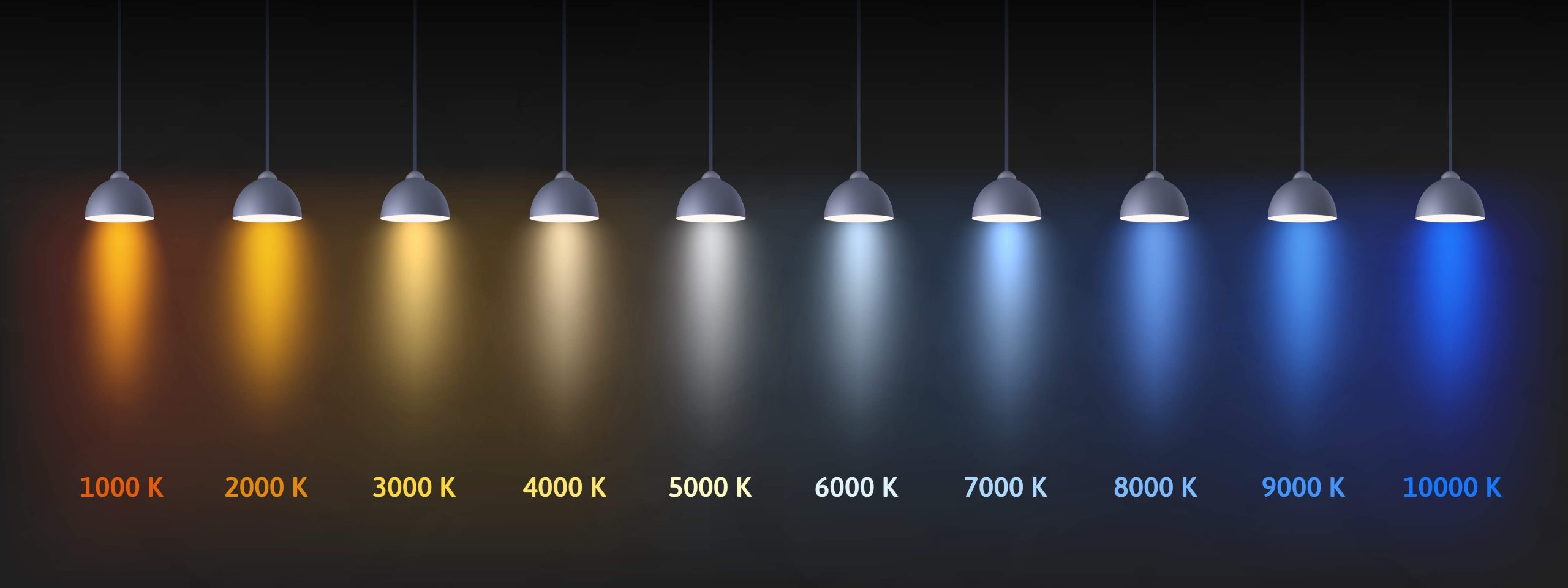
Color temperature is measured in Kelvin (K), and it determines the “cool or warm tone” of the space.
2700K to 3000K: This is typical warm yellow light, creating an ultimate relaxing and warm atmosphere. This color temperature helps calm the mood and is very suitable for bedrooms, dining rooms, or leisure corners where a cozy feeling is desired, effectively reducing the coldness of the home environment.
Around 4000K: Known as natural light or neutral light, the tone is close to afternoon sunlight. This light is neither yellow nor blue and can showcase the most authentic spatial textures and material colors. It is the most recommended whole-house universal color temperature by interior design experts today.
Above 5000K: Belonging to cool white light, it provides high clarity and sharpness. While less warm, it greatly improves concentration and brightness, so it is often used in kitchen work areas, bathrooms, or study environments requiring fine operations. In modern or minimalist home decor, partial high color temperature light can increase visual cleanliness.
C. Color Rendering Index (CRI)
Color rendering (expressed as CRI or Ra value) represents the ability of light to restore the true color of objects, which has a decisive impact on home texture. When choosing home lighting fixtures, the Ra value is the most intuitive standard for judging light quality, determining whether home decor materials can present the intended beauty under light.
Definition of Ra Index: Ra refers to the average value of the light’s ability to restore the color of natural objects, usually based on sunlight (Ra = 100). The closer the Ra value is to 100, the closer the object’s color is to its true appearance under natural light. For a designer pursuing detail, a high Ra index is a non-negotiable specification.
Ra > 80: This is the current entry-level standard for LED home lighting fixtures. For functional spaces like corridors, storage rooms, or balconies, Ra 80 can meet basic visual identification needs with a friendly price.
Ra > 90: For residents who value life quality, whole-house configuration of fixtures with Ra 90 or above is a trend. High-quality color rendering is crucial for “color restoration.” In the dining room, it makes ingredients look vivid; in the dressing room, it ensures no color difference in outfits; in art display areas, it ensures artworks and interior fabric art present the most original and expensive textures.
Full Spectrum Lighting (Ra > 95): In modern high-end home decor, meeting Ra 80 or Ra 90 is no longer enough. So-called “Full Spectrum Lighting” refers to fixtures with an Ra index greater than 95. This technology aims to simulate the full spectrum of sunlight, filling the gaps of traditional LEDs in cyan and deep red light. When the Ra index reaches above 95, the saturation and continuity of light are extremely high, allowing various high-end materials in interior design—such as marble textures, solid wood skins, or velvet—to be presented as delicately as artworks.

IV. Conclusion
Choosing home lighting fixtures is not a simple procurement act but a deep rehearsal of future life patterns, spatial senses, and psychological emotions. Starting from understanding the basic physiological and advanced psychological needs of each space, combined with professional interior design logic, selecting appropriate sizes, precisely controlling color temperature levels, and insisting on high-quality color rendering fixtures can truly transform a cold architectural frame into a warm haven and realize the ideal home decor vision.
The use of light is a science and an art. Whether providing a modern minimalist brightness through evenly distributed recessed downlights or creating a quiet, warm atmosphere in corners with exquisite wall lights, delicate and layered light and shadow configurations can make your home appear more open and deep visually. A home should not have only one expression, and light is the magic wand that gives the space a variety of faces.
In the actual construction and planning process, lighting often involves complex electrical configurations and ceiling height limits; therefore, it is strongly recommended that homeowners engage in deep communication with a professional designer in the early stages of home decor. Coordinating the lighting plan, socket circuits, and fixture list not only avoids later maintenance difficulties but also ensures the final spatial light environment meets both aesthetic requirements and excellent practicality and durability, allowing every home decor budget to achieve maximum benefit.
View more interior design projects and interior design case studies
More Information:
2025 Interior Design Projects & Renovation Ideas: Discover 11 Popular Styles in Detail!
TOP 10 Interior design styles: Furniture Arrangement + Lighting Selection!
Top 10 LED Lighting Manufacturers in the World 【2025 updated】
American Interior Design|Home Lighting Design Tips Designers Recommend!
MUJI Interior Design|Home Lighting Design Tips Designers Recommend!
Industrial Interior Design|Home Lighting Design Tips Designers Swear By!
Modern Interior Design and Home Lighting: Interior Designers’ Top Tips for a luxury, Stylish Home!
Nordic Interior Design and Home Lighting: Interior Designers’ Top Tips for a Cozy, Stylish Home
Welcome to contact us for Home Lighting Design and Home Lighting procurement!
Website: https://tj2lighting.com
Whatsapp: +886 988147729
Phone: +886 4-2534-1768
E-mail: sales@tj2lighting.com
Line: @034wnuyy
| Recommend Home Lighting Fixtures


| Related Articles
-
Home Lighting Manufacturers and Suppliers | Bedroom Lighting Design/Bedroom Lighting Fixtures | Commercial Lighting | Home Lighting | Illumination in Practice | Indoor Lighting | Indoor Lighting Manufacturers and Suppliers | Living Room Lighting Design/Living Room Lighting Fixtures
Choosing Downlights Height And Size: Professional Specifications For Designers!
I. Introduction In the realm of contemporary space planning, the interplay of light and shadow is often the final key to determining…
-
Indoor Lighting | Bedroom Lighting Design/Bedroom Lighting Fixtures | Commercial Lighting | Home Lighting | Illumination in Practice | Indoor Lighting Manufacturers and Suppliers | LED Lighting Manufacturer | Living Room Lighting Design/Living Room Lighting Fixtures
Lighting Size and Height Guide: Professional Specifications For Home Interiors!
I. Introduction: The Key to Lighting Aesthetics—Precision in Fixture Specifications In the professional field of interior design, lighting configuration is never just…
-
Home Decor Styles/ Ideas | DIY Home Decor Ideas and DIY Projects | Home Lighting | Illumination in Practice | Indoor Lighting | Interior Design Projects and Case Studies | Nordic Interior Design/Scandinavian Interior Design Projects and Cases
Scandinavian Interior Design|5 Lighting Design Tips To Upgrade Your Home!
Introduction Scandinavian interior design is renowned for its simplicity, natural elements, and comfort, making it one of the most desirable home styles…


Download The New Lighting Catalogue
Our latest lighting catalogue has been released! Product lines include indoor, outdoor and commercial lighting items.
Try to get more product information for your projects and requirements. Contact us immediately!

TJ2 Lighting | led lighting manufacturer, lighting manufacturer in Taiwan
TJ2 specializes in indoor, commercial and outdoor lighting, including led downlights, ceiling lights, track lights, spotlights, wall lights, in-ground lights, bollards and downlight modules with various types of models and customized products available.
As a premier led lighting manufacturer and lighting supplier in Taiwan, we are dedicated to catering to a wide range of lighting demands.


