Translucent Stone Design: Stone Types and LED Lighting To Create Luxury Interiors
一、引言
In recent years, translucent stone has become one of the most highly regarded materials in the field of high-end 室內設計, widely used in luxury residences, boutique commercial spaces, hotel lobbies, and reception centers. Compared with ordinary stone that only displays surface textures, the greatest feature of translucent stone is its ability to work with backlight sources, allowing light to pass through the material itself and create a soft, layered lighting effect. This transforms stone from a simple decorative surface into a visual focal point within a space.
In modern interior lighting planning, atmosphere and texture have become increasingly important, and LED燈條/燈帶 have become a key element in translucent stone design. Through high-density LED linear lighting, the translucency effect becomes more even and refined, avoiding issues such as light spots or inconsistent brightness. This allows the natural texture of the stone to be presented more clearly, further enhancing the overall spatial quality. For many designers, combining translucent stone with LED lighting has already become a standard approach for creating high-end spaces.
This article will start from the basic concept of translucent stone, deeply analyze its common types and characteristics, and explain how to integrate LED lighting technology in 室內設計, including the applications of LED燈條/燈帶 and LED sheets. It will also explore the performance of high-density SMD light sources and silicone LED strips in real spatial applications, helping readers gain a more comprehensive understanding of the value of translucent stone in modern space design.
了解更多:
2026室內設計風格、案例指南,設計師私藏11大風格完整解析!
室內燈具/居家燈具專區 - LED照明燈具領導品牌
居家燈具全攻略:燈具類型、挑選重點與空間應用一次看!
Ⅱ. What is Translucent Stone? What Types of Translucent Stone Are There?
Translucent stone refers to stone materials or composite panels that possess semi-transparent or light-transmitting properties, allowing backlighting to create a light penetration effect. Ordinary natural stone has high density, making it difficult for light to pass through. However, certain special minerals or processed panels can achieve translucency through thin cutting, polishing, or composite techniques. When light is evenly introduced into the material, it not only reveals texture details but also creates a softer and more dimensional atmosphere.
In modern 室內設計 applications, translucent stone is commonly used in feature walls, cabinet facades, bar counters, display walls, and reception areas, often combined with LED燈條/燈帶 or LED sheets for backlighting. This “stone + lighting” combination has become a highly representative design language in high-end spaces.
1. Natural Stone
Natural translucent stone belongs to the premium material category, commonly including jade, agate, quartz, and certain naturally translucent minerals. The greatest value of this material lies in its naturally formed textures and color variations, where every slab is unique, giving it extremely high artistic and collectible value in high-end 室內設計.
When paired with LED燈條/燈帶 for backlighting, the natural textures are fully revealed as light flows through the material, creating a sense of depth and layering. In practical applications, natural translucent stone is often used by designers in entry feature walls, TV walls, dining room feature walls, and boutique display areas. Through precise interior lighting control, the space can transform into a refined and luxurious atmosphere when illuminated at night. Some jade materials even produce effects similar to sculptural artwork under backlighting, making them popular in luxury residences and premium commercial spaces.
However, natural translucent stone is relatively expensive and heavy, requiring stricter structural and installation considerations. Therefore, designers must carefully plan LED light placement to avoid uneven brightness or shadow issues. To achieve better light diffusion, high-density LED sheets or diffusion layers are often used to ensure even light penetration and a refined visual result.
2. Artificial Translucent Stone Panels
Compared with natural stone, artificial translucent panels are a widely used alternative in the market today. They are typically made from acrylic, resin, or mineral composite materials and use texture-mimicking techniques to replicate the appearance of natural stone. Their key advantages are lighter weight, easier installation, and lower cost, making them highly suitable for large-scale 室內設計 and commercial spaces.
One major advantage of artificial translucent panels is their stable light transmission performance. When combined with LED燈條/燈帶 or LED sheets, they produce very even lighting effects and reduce the grainy appearance caused by traditional point light sources. Additionally, these materials offer greater flexibility in color and texture selection, allowing them to match various design styles, from modern minimalism to boutique hotel aesthetics.
For many designers, artificial translucent panels not only improve construction efficiency but also make it easier to control interior lighting effects. As a result, they have become mainstream materials in modern commercial and residential design. When combined with LED linear lighting, they significantly enhance spatial texture, resulting in a cleaner, more refined, and layered visual experience.
Ⅲ. Practical Applications of Translucent Stone
The reason translucent stone has gained popularity in modern 室內設計 is not only its natural texture, but more importantly, its ability to integrate with interior lighting systems. When combined with LED燈條/燈帶, silicone LED strips, or LED sheets, static stone surfaces are transformed into dynamic light-and-shadow facades, elevating spaces from flat visuals to three-dimensional atmospheric expressions.
In recent years, the use of translucent stone has significantly increased in both luxury residential and commercial projects. Many designers use it as a core visual element to create memorable spatial language through the integration of light and material, making spaces not only visually appealing but also expressive of brand identity and ambiance.
1. Residential Spaces
In modern residential 室內設計, one of the most common applications of translucent stone is the entry feature wall. As the first visual point when entering a home, designers pay special attention to its lighting expression. By combining translucent stone with LED燈條/燈帶, light gently diffuses through the stone surface, creating a welcoming and ceremonial atmosphere that enhances the first impression of the home. Some high-end designs even incorporate hidden structures and zoned lighting control to create rhythm and depth in the lighting effect.
The TV wall is another key application area. Compared with traditional wood or stone walls, translucent stone combined with interior lighting produces a softer and more layered background glow at night. With warm white or natural light LED configurations, the illumination is not harsh but instead wraps the space in a comfortable ambient glow, balancing relaxation and luxury. At the same time, the stone texture becomes more dimensional under lighting, making the TV wall a strong visual focal point in the living room.
In addition, translucent stone has gradually expanded into dining bar counters, corridor feature walls, bedhead backgrounds, and bathroom wall applications. Through the integration of LED sheets and linear lighting, different areas within the home can share a consistent lighting language, improving spatial continuity and design coherence. This unified lighting approach enhances the overall elegance and visual order of the residential environment.

2. Commercial Spaces
In commercial 室內設計, translucent stone has become an essential visual element in high-end brand environments. Whether in luxury retail stores, five-star hotel lobbies, or premium dining and corporate reception areas, designers frequently use translucent stone as a feature wall or brand identity surface, combining light and material to create a strong visual impression.
In boutique retail design, translucent stone is commonly used in counters, brand walls, and key product display areas. When illuminated with evenly distributed high-density LED燈條/燈帶, it enhances both the texture of the stone and the visual appeal of the products, strengthening visual focus. In some high-end retail environments, designers even use segmented lighting control to give each display zone its own lighting rhythm, enhancing spatial layering and storytelling.
In hotels and dining spaces, translucent stone is often used in reception counters, bar fronts, and entrance feature walls. With LED sheets providing stable and large-area uniform lighting, the interior lighting creates a soft, clean, and deep atmospheric effect. Guests can immediately sense the design intention and brand positioning upon entry. The flowing light within the stone further enhances emotional expression and spatial memory, making commercial environments not only functional but also highly experiential and visually distinctive.


商業空間透光石應用 Translucent stone Application In Commercial Interior Design

商業空間透光石應用 Translucent stone Application In Commercial Interior Design
Ⅳ. Applications of Translucent Stone and Backlighting
The reason translucent stone can achieve a premium, refined, and highly design-oriented visual effect does not depend solely on the grade or texture of the stone itself. The most critical factor actually comes from the interior lighting design behind it. In practical 室內設計 applications, even when high-end natural stone or artificial translucent panels are used, poor lighting planning—such as uneven brightness distribution, localized overexposure, or lack of diffusion structure—can still lead to shadow discontinuities, overly strong light spotting, or obvious brightness imbalance. These issues ultimately damage the overall spatial quality. Therefore, backlighting is just as important as the material itself in translucent stone applications, and in some cases, it even determines the final visual outcome.
In recent years, backlighting design for translucent stone can be mainly divided into three core forms: LED sheets, LED燈條/燈帶, and silicone LED strips. Each of these light sources has different structural and visual characteristics. LED sheets provide large-area uniform illumination and are suitable for full wall applications; LED strip lights focus on linear flexibility and are ideal for feature walls or localized lighting effects; while silicone LED strips combine flexibility and high diffusion performance, making them particularly suitable for complex shapes or spaces requiring soft ambient glow. Through different combinations of these lighting types, translucent stone can achieve more stable and layered lighting effects across various spatial scenarios, enhancing the flexibility of overall interior lighting design.
In addition, with the advancement of high-density LED technology, both LED sheets and LED strip lights have significantly improved traditional issues such as graininess and uneven brightness. This allows light to diffuse more naturally and smoothly within the translucent stone. When light evenly penetrates the stone’s natural texture, it not only highlights the intricate mineral structure but also creates a cleaner, softer, and more premium spatial atmosphere. This “integration of light and material” design approach has made translucent stone one of the most representative lighting media in modern 室內設計.
1. Applications of Translucent Stone + LED sheets
In backlit translucent stone applications, LED sheets primarily serve as a “large-area uniform light source.” Due to their surface-emitting design, LED sheets provide continuous and highly even illumination, effectively reducing common issues associated with point or linear light sources, such as uneven brightness, visible light spots, or localized shadows. When applied to large translucent stone feature walls, LED panels ensure consistent brightness across the entire surface, allowing the stone texture to appear cleaner, softer, and more visually extended. This makes them particularly suitable for hotel lobbies, high-end commercial spaces, and luxury reception walls where overall visual impact and refined texture are essential.
Another key advantage of LED sheets is their near “full-surface illumination” visual effect. Unlike LED strip lights, which rely on density and structural layout to achieve uniformity, LED sheets already integrate diffusion and light-guiding systems. This makes them easier to control in both design and installation, ensuring consistency across large-scale applications. In expansive translucent stone walls, LED panels also minimize seam-related light discrepancies and prevent localized over-bright or under-lit areas, resulting in a cleaner, seamless lighting surface that meets the high-end design requirement of a “perfect light plane.”
In practical applications, LED sheets are commonly used in full TV walls, corporate brand feature walls, hotel lobby reception backdrops, and large exhibition spaces. Through stable and highly uniform backlighting, they not only enhance the layered texture of translucent stone but also elevate the wall itself from a background element to a dominant visual focus, further strengthening the recognition and premium feel of the overall 室內設計.

2. Applications of Translucent Stone + LED Strip Lights and Silicone LED Strips
Compared with LED sheets that emphasize overall uniform lighting, LED燈條/燈帶 focus more on flexibility and expressive lighting design. As linear light sources, LED strip lights can be configured according to the proportions, cutting methods, and design language of translucent stone, making them ideal for localized feature walls, linear accents, segmented backlighting, or layered façade compositions. Through different arrangements and lighting rhythms, designers can precisely control light direction, allowing translucent stone to present more dynamic and visually rhythmic lighting effects.
In practical implementation, LED strip lights are often combined with aluminum channels and diffusion covers to improve heat dissipation and optimize light diffusion, further reducing light spotting and uneven brightness. When high-density LED strip lights are used, they can maintain their linear characteristics while achieving a visual softness close to a surface light source. This allows the translucent stone texture to appear more delicate, continuous, and natural.
At a more advanced level, silicone LED strips have become an important supplementary solution in translucent stone backlighting due to their flexibility and high diffusion properties. These strips are especially suitable for curved walls, irregular structures, or spaces requiring soft ambient lighting. They effectively reduce the visual presence of the light source itself, producing a more uniform diffused glow. This “linear light + natural stone” combination is commonly found in modern minimalist, light luxury, and boutique commercial spaces, significantly enhancing spatial refinement and design completeness.
The applications of LED strip lights are extensive, including translucent stone entry feature walls, partial backlit TV walls, bar counter linear lighting, and internal display cabinet illumination. Through varied lighting distribution and rhythm design, spatial depth is enhanced, and translucent stone gains a more dynamic visual language through changing light and shadow, making overall interior lighting design more flexible and contemporary.


|Translucent Stone Lighting Design Projects
五、結論
In contemporary 室內設計 trends, lighting has evolved far beyond a basic functional tool—it has become a core design language that defines spatial atmosphere and perceived value. Especially in luxury residences and high-end commercial environments, designers increasingly focus on the interaction between light and materials, and translucent stone has emerged as a key medium under this design philosophy. It is not merely a decorative material but a spatial element that can be reinterpreted through light.
The greatest value of translucent stone lies in its ability to integrate natural stone textures with LED lighting effects. Through combinations of LED sheets 與 LED燈條/燈帶, it creates lighting expressions with depth and layering. When light passes evenly through the material, it enhances texture details while simultaneously producing a softer and more luxurious spatial atmosphere. This fusion of material and light transforms spaces from simple visual presentations into experiential environments filled with mood and emotion.
From a practical perspective, whether it is the premium texture of natural translucent stone or the flexibility and efficiency of artificial panels, both can achieve optimal results through different forms of interior lighting. In residential spaces, it creates a warm and comfortable living atmosphere; in commercial spaces, it strengthens brand identity and visual memorability. When LED sheets, LED燈條/燈帶, and silicone LED strips are properly integrated, translucent stone is no longer just a building material—it becomes a core design element that truly elevates spatial value.
更多資訊:
室內燈光設計指南|建築大師燈光思維 & 6大室內燈具全解析
照明設計全攻略:解析6大裝潢風格照明與燈具選購要點|室內設計
照明設計攻略:設計師私藏居家照明5大技巧,小預算打造居家高級感|室內設計
櫥櫃鋁條燈指南:5大櫥櫃照明重點+獨家鋁條燈推薦,打造質感居家空間
10大裝潢風格推薦|家具配置 × 燈具挑選 × 完整室內設計案例指南!
打造無印風室內設計:室內設計師推薦的居家照明與室內燈具選擇!
工業風室內設計|居家照明這樣規劃,室內設計師大推!
現代風室內設計|居家照明這樣規劃,連室內設計師都大推!
北歐風室內設計: 居家照明這樣設計超有感! 室內設計師都說讚
如有室內照明設計或室內燈具相關採購需求,歡迎透過以下管道聯繫我們:
● 官方網站: https://tj2lighting.com
● Whatsapp: +886 988147729
● 聯繫電話: +886 -4-25341768
● 電子郵件: sales@tj2lighting.com
● Line: @034wnuyy
| 室內燈具推薦
| 裝飾燈具推薦


| 相關文章
-
專業LED居家燈具製造與供應商 | 臥室照明設計/臥室燈具採購 | 商業照明 | 居家照明 | 照明設計實務 | 室內照明/室內燈具 | 專業LED室內燈具製造與供應商 | 客廳照明設計/客廳燈具採購
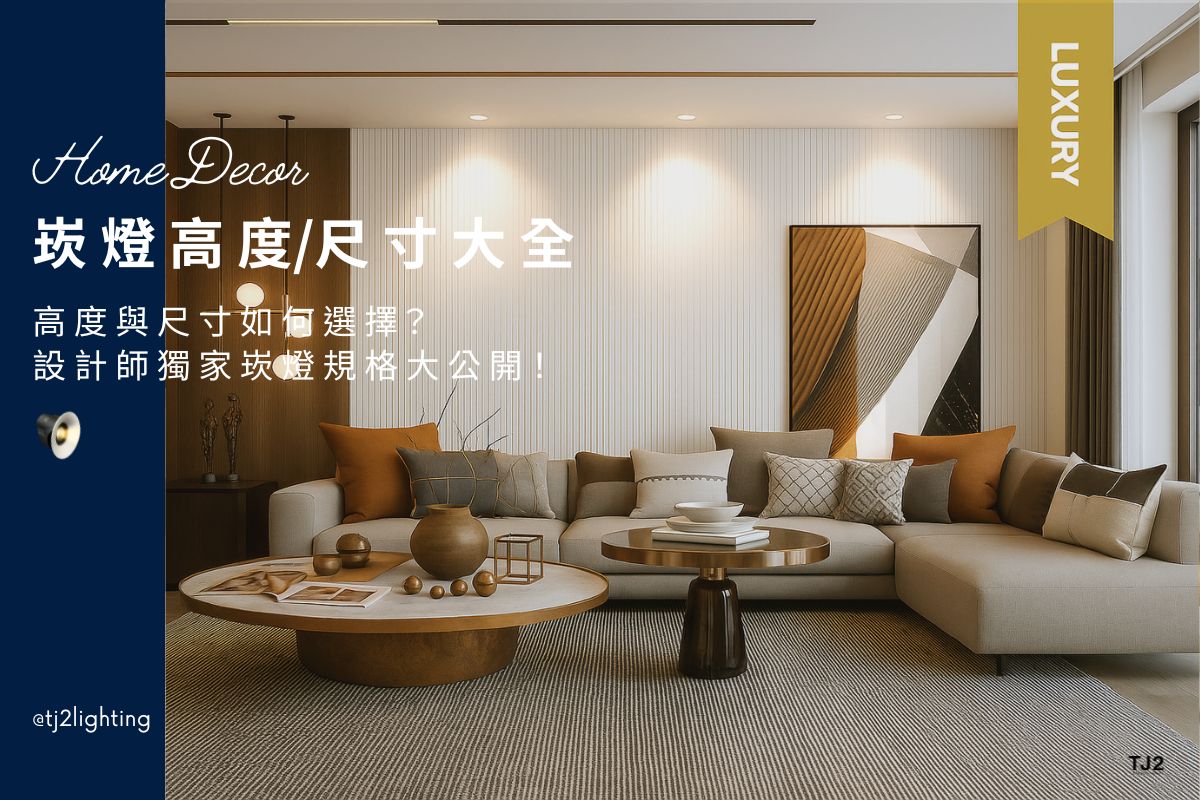
如何挑選崁燈高度與尺寸?設計師私藏燈具規格全解析
在當代空間規劃的範疇內,光與影的交織往往是決定設計質感的最終關鍵。當我們置身於專業人士規劃的場域時,常能體會到一種精緻且放鬆的氛圍,這背後其實包含了精密的光學計算與燈具篩選邏輯。在各類照明設備中,崁燈憑藉其簡潔、隱蔽且具備高度整合性的特點,成為了居家裝潢中最核心的照明方案。無論是需要營造溫潤感的客廳,或是要求高亮度視野的廚房,崁燈都能透過多樣的規格配置,精準達成不同空間的照明目的。崁燈高度、開孔尺寸以及額定瓦數這三大指標,不僅關乎光學表現,更直接影響天花板的施作工法與長期的居住安全。
-
室內照明/室內燈具 | 臥室照明設計/臥室燈具採購 | 商業照明 | 居家照明 | 照明設計實務 | 專業LED室內燈具製造與供應商 | LED 照明解決方案領導品牌 | 客廳照明設計/客廳燈具採購
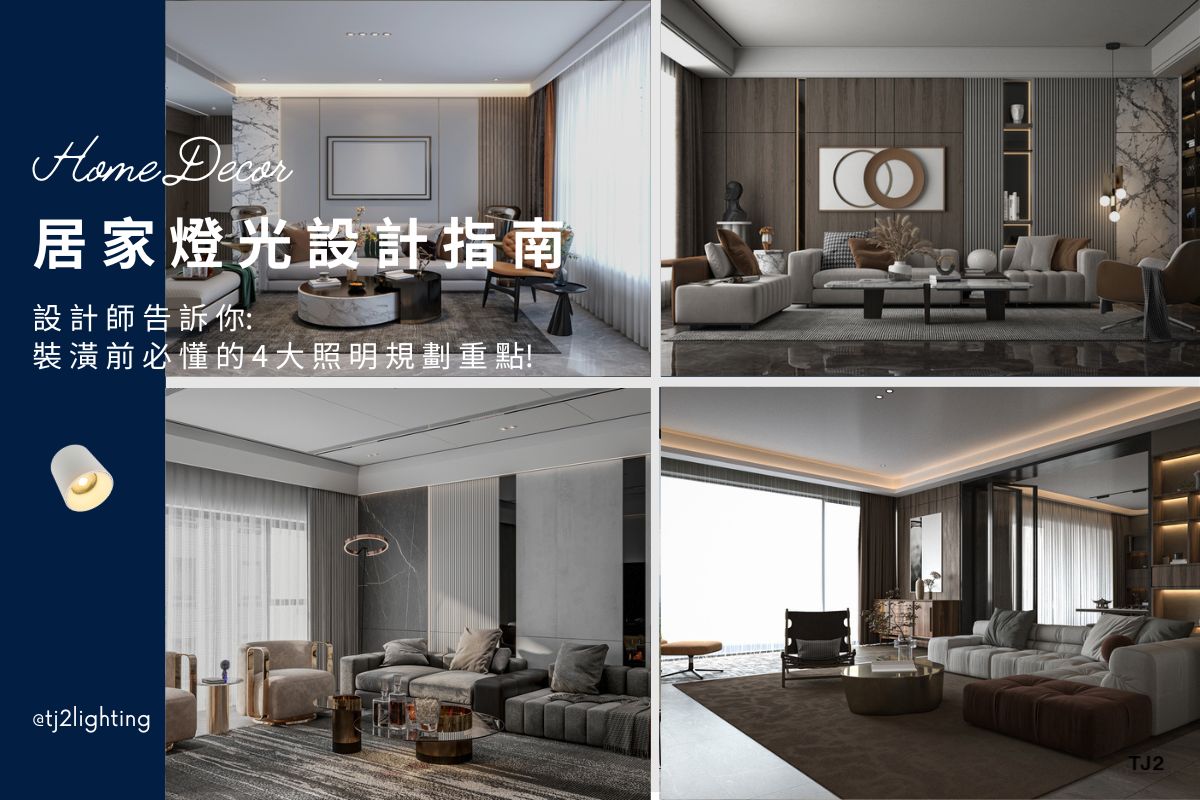
燈具高度與尺寸如何選擇?設計師私藏的燈光規格一次看!
在室內設計的專業領域當中,燈光配置絕對不僅僅是為了提供基本的照明功能,它更是營造居家氛圍、突顯空間視覺層次、甚至能進一步影響居住者心理感受的靈魂角色。一套能被稱為成功的室內設計作品,其燈具的挑選流程、配置邏輯與最終的安裝規格,必然都經過了設計師極為精心的考量與計算。許多人在自行進行居家裝潢或軟裝佈置時,常會將視覺焦點過度放在燈具的外型設計或材質質感上,卻往往忽略了至關重要的燈具安裝高度與本體尺寸問題。本篇深度文章將完全從室內設計的專業實務角度出發,提供最詳盡的燈具高度與尺寸建議
-
裝潢風格案例/裝潢圖庫總覽 | 居家裝潢DIY/DIY裝修專案 | 居家照明 | 照明設計實務 | 室內照明/室內燈具 | 室內設計案例/室內裝修案例 | 北歐風室內設計案例/作品
北歐風格裝潢|設計師推薦5大燈光設計技巧,居家空間秒升級!
北歐風格裝潢以「簡約、自然、舒適」聞名,近年來成為許多人心目中最理想的居家選擇。這種風格以純淨色彩、俐落線條與天然材質為基礎,營造出清新卻溫潤的生活氛圍。然而,許多在規劃北歐風居家的人,往往將重點放在家具挑選與軟裝搭配,卻忽略了燈光設計在其中的關鍵作用。即使選擇了再精緻的家具,如果缺少合宜的燈光襯托,整體氛圍也難以達到理想的效果。專業的室內設計師都知道,燈光設計並非只是單純的照明,它同時是塑造層次感、氛圍感與立體感的重要元素。透過妥善的燈光規劃,北歐風格裝潢能更具美感與舒適度,讓居住者在不同時間都能享受最佳的空間氛圍。
TJ2 Lighting 東捷生活科技 | LED照明解決方案領導品牌 | 照明設計公司 | 深耕台灣,逐鹿全球
TJ2 Lighting 專注於室內、商業和戶外照明,包含LED崁燈、吸頂筒燈、軌道燈、投射燈、壁燈、埋地燈/地底燈、戶外柱燈/庭園燈和LED光源模組等,提供多種樣式燈具以及客製化服務。TJ2 Lighting擁有一條龍的MIT產銷體系,能夠提供給客戶最及時、彈性的照明解決方案,以及優質的照明設計服務。
身為台灣LED照明解決方案領導品牌,團隊具有多年內銷、外銷經驗,與國內知名品牌業者、室內設計師均有合作,並致力於提供完整的照明產品與照明設計服務,以達到最大的客戶滿意。