Interior Lighting Design Guide: Lighting Layout Tips & Layered Lighting Ideas
一、引言
In today’s interior design planning, lighting is no longer just a basic feature that provides brightness. It has become one of the key elements that influence spatial atmosphere, living comfort, and overall visual quality. When renovating a home, many people tend to focus on building materials, furniture, or style coordination, but what truly affects the sense of luxury and layering within a space is whether the interior lighting design has been properly planned.
A mature interior design is not only about visual aesthetics on the surface. It is about allowing people to naturally feel the comfort of the lighting, the logic of the movement flow, and the relaxing atmosphere when entering the space. These details are often highly connected to the configuration of indoor lighting fixtures.
When professional designers plan interior lighting design, they usually do not begin by selecting lighting fixture styles. Instead, they first analyze spatial functions and daily living behaviors. For example, the living room is more focused on communication and leisure, the dining room emphasizes dining atmosphere, the kitchen requires clear and stable task lighting, while the bedroom prioritizes comfort and relaxation. Different spatial requirements also mean that the lighting layout methods must be completely different.
Therefore, truly excellent interior lighting design is essentially a planning mindset that combines lifestyle habits with spatial functionality, rather than simply completing the installation of indoor lighting fixtures.
了解更多:
2026室內設計風格、案例指南,設計師私藏11大風格完整解析!
室內燈具/居家燈具專區 - LED照明燈具領導品牌
II. The Most Common Problems in Interior Lighting Design
In many real interior design projects, discomfort in space usage is often not caused by the renovation itself, but rather by the lack of complete interior lighting design planning. Many people only begin to notice glaring light, uneven brightness, or inconvenience in usage after moving in, and these issues are usually directly related to the lighting layout. The following are some of the most common lighting problems found in interior design.
1. Main Lights Are Too Bright with Exposed Bulbs, Easily Creating Harsh Glare
Many traditional homes still use large main lights as the primary lighting source. However, if the bulbs are directly exposed and lack shielding or diffusion design, the lighting can easily become overly intense and direct. This type of light not only feels visually harsh, but prolonged exposure can also cause eye fatigue and a sense of pressure, further affecting living comfort.
As a result, more and more designers now reduce reliance on a single main light in interior lighting design and instead adopt multi-point lighting layouts. By distributing light through indoor lighting fixtures placed in different positions, the overall lighting environment becomes more even and softer. At the same time, glare problems can be reduced while enhancing the layering and refinement of the interior design.
2. Installing Downlights Directly Above the TV Wall Easily Causes Reflection Interference
The TV wall is usually the visual focal point of the living room. However, if downlights are directly installed above the TV without adjusting the projection direction, screen reflection problems can easily occur. When light directly reflects onto the TV surface, the display may appear foggy or washed out, which affects the viewing experience.
This issue is actually very common in interior lighting design, mainly because the lighting direction does not properly coordinate with the spatial function. A more ideal approach is to avoid directing light straight onto the screen and instead use side lighting or indirect lighting sources, allowing the light to remain on the background wall or architectural structure. This not only reduces reflection interference, but also gives the interior design a stronger spatial atmosphere and sense of depth.
3. Installing Downlights Above the Bed Easily Directs Light into the Eyes While Lying Down
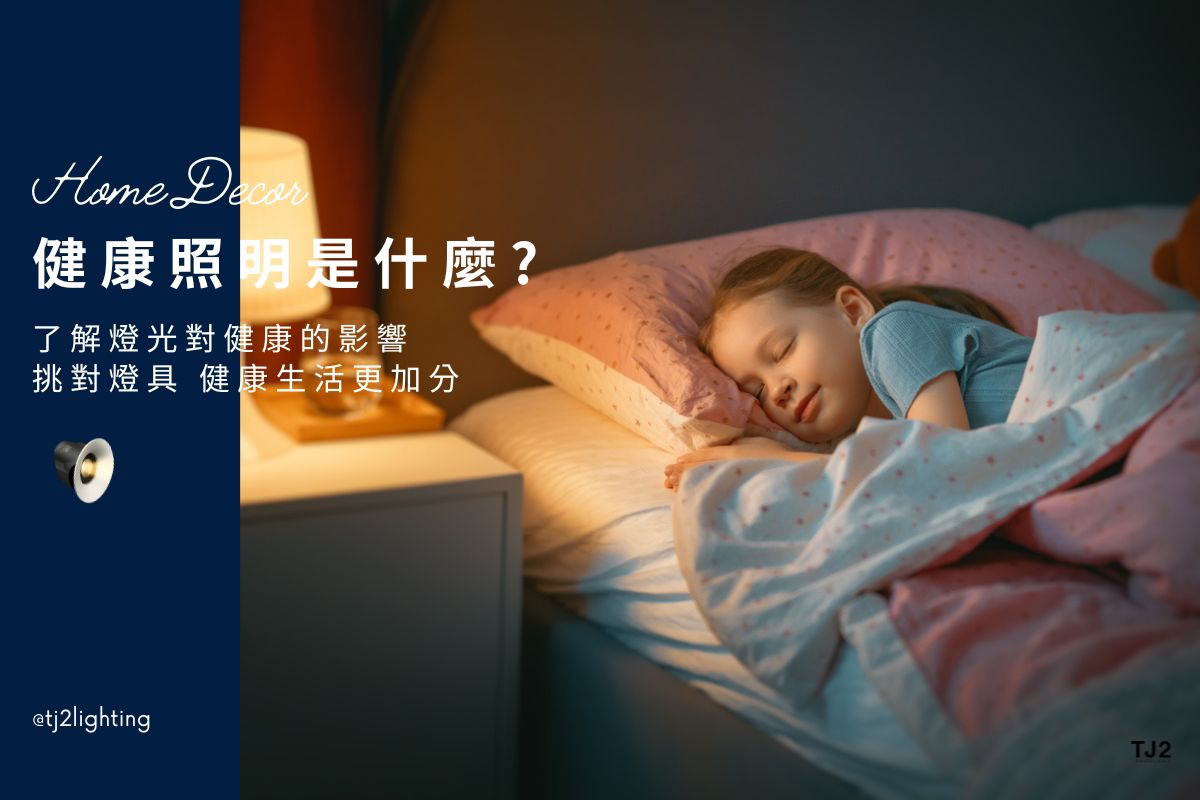
Bedrooms are spaces intended for relaxation and rest, so lighting comfort is extremely important. If downlights are directly installed above the headboard, the light will enter the user’s field of vision when lying down, creating obvious glare and visual pressure. Over time, this may even affect sleep quality.
Therefore, when professional designers carry out bedroom interior lighting design, they usually avoid direct lighting above the headboard as much as possible. Instead, they use softer lighting methods such as bedside wall lights, indirect lighting strips, or side lighting sources. These indoor lighting fixtures can maintain spatial brightness while preventing direct visual disturbance, making the overall space more aligned with human comfort needs.
4. Uniform Lighting Fixture Arrangements Throughout the Entire Home Ignore Functional Differences Between Spaces
Many basic interior design projects often use evenly spaced downlights during lighting planning. Although this may appear neat visually, it can easily overlook the functional needs of different spaces.
For example, the living room requires atmosphere creation and spatial layering, the dining room emphasizes ambiance, the kitchen needs bright and clear task lighting, while corridors only require basic guiding light. If all areas use the same brightness and the same layout method, problems such as over-bright or overly dark zones can easily occur. At the same time, the entire interior lighting design will also lack visual layering and variation.
A truly mature interior design usually adjusts lighting layouts according to spatial functions rather than simply pursuing perfectly aligned lighting fixture arrangements.
5. Ignoring Functional Lighting Affects Daily Convenience
Although functional lighting may not be as visually prominent as main lighting, it is still a very important part of interior lighting design. When planning indoor lighting fixtures, many people only focus on whether the space is bright enough, while overlooking practical daily usage needs.
For example, wardrobes without interior cabinet lighting can make it difficult to find clothes due to insufficient brightness. If the kitchen lacks under-cabinet lighting, hand shadows can easily appear during food preparation. Insufficient desk illumination can also increase visual strain during long periods of reading and work. These issues may seem like minor details, but they are actually highly related to whether the interior lighting design is fully planned.
Therefore, when professional designers carry out interior design planning, they usually consider daily movement flow and functional needs simultaneously, allowing indoor lighting fixtures to serve not only as decorative elements, but also as tools that genuinely improve living convenience and quality of life.
了解更多:
居家燈光設計指南: 10年資深設計師教你打造高質感居家空間
居家燈具全攻略:燈具類型、挑選重點與空間應用一次看!
III. Horizontal Layer Planning in Interior Lighting
If interior lighting design only focuses on whether “the space is bright enough,” the overall interior design can easily lack depth and layering. Truly mature spatial planning usually begins with usage requirements, dividing interior lighting into different functional categories and then systematically arranging indoor lighting fixture layouts through structured logic. This horizontal dimension of lighting design thinking is also one of the core frameworks many professional designers use during spatial planning. It is not simply a classification of lighting, but a key factor that directly affects spatial quality and daily living experience.
1. Foundational Lighting
Foundational lighting belongs to the lowest and most important lighting structure within overall interior lighting design. Its primary purpose is to provide stable and even spatial brightness, ensuring people can maintain clear visual recognition regardless of where they are in the space. Unlike atmosphere lighting or accent lighting, which emphasize mood and visual effects, foundational lighting focuses on stability and uniformity.
In actual interior design planning, common indoor lighting fixtures often use downlights or ceiling lights as foundational lighting sources. However, the truly important factor is not the number of fixtures, but whether the lighting can evenly extend throughout the entire space. If the foundational lighting plan is incomplete, such as excessive spacing between fixtures or uneven brightness distribution, certain areas may become overly bright while others remain too dark, creating visual fragmentation and discomfort.
For professional designers, foundational lighting is more like the underlying lighting environment of a space. If this foundation is not properly established, adding more indoor lighting fixtures later will still make it difficult for the overall interior lighting design to achieve an ideal result. Therefore, during the early stages of interior design planning, designers usually prioritize confirming the uniformity and comfort of the foundational brightness. This is also one of the biggest differences between professional planning and ordinary construction approaches.
2. 重點照明
In interior lighting design, accent lighting mainly serves as visual guidance. Its purpose is not to illuminate the entire space, but rather to focus light onto specific areas, objects, or materials, making them become visual focal points. This type of lighting arrangement helps interior design create clearer visual hierarchy while enhancing spatial rhythm and three-dimensional depth.
For example, display cabinets, artwork, TV walls, or walls with special materials can all strengthen their visual effects through accent lighting. By controlling the projection angle and beam spread of indoor lighting fixtures, people’s sightlines can naturally focus on specific areas rather than being evenly dispersed throughout the space.
Within the planning logic of professional designers, accent lighting is not simply about illuminating a certain location. Instead, it is arranged together with spatial movement flow and visual rhythm. When people enter a space, the lighting first focuses on the primary visual center before gradually extending toward other areas. This layered lighting arrangement is also one of the important characteristics of high-quality interior lighting design.
3. 功能照明/任務照明
Functional lighting is the layer of interior lighting design that is closest to everyday living needs. Unlike atmosphere lighting, which emphasizes ambiance, functional lighting focuses on practical convenience and directly affects operational efficiency and living comfort within a space.
In interior design, every space has different functional lighting requirements. For example, kitchens require high-brightness task lighting with minimized shadows, such as under-cabinet lighting. Desk areas require stable and focused reading light, such as table lamps. Wardrobes require cabinet lighting to improve interior visibility. If these types of indoor lighting fixtures are not properly planned, various usability problems can easily occur, such as excessive shadows during cooking, insufficient brightness when searching for clothes, or eye fatigue after long periods of reading. Although these problems may appear minor, they can actually affect living quality over the long term.
For designers, the most important aspect of functional lighting is not whether it is decorative, but whether it can truly satisfy daily living requirements. Although it is the most practical layer of interior lighting design, it is also one of the most frequently overlooked details.
4. Atmosphere Lighting
Atmosphere lighting is the layer within interior lighting design that possesses the strongest emotional and spatial expressiveness. Its core purpose is not to provide primary brightness, but to shape spatial atmosphere and living scenarios through soft lighting. When lighting is softened and indirectly projected, the space can transform from a purely functional environment into a living space filled with emotional warmth.
In interior design, common indoor lighting fixtures used for atmosphere lighting include light strips, indirect lighting, wall lights, and concealed lighting sources. These lights usually do not shine directly into people’s eyes, but instead appear through reflective or indirect methods, making the overall space feel softer and more relaxing.
The greatest value of atmosphere lighting lies in the fact that it is often not directly noticed, yet can be clearly felt. When used appropriately, even spaces without excessive decoration can still present a sense of luxury and spatial layering. For many designers, this layer is also the interior lighting design technique that best demonstrates detail and taste, while simultaneously representing one of the key differences between high-end interior design and ordinary spatial planning.

IV. Vertical Layer Planning in Interior Lighting
In addition to arranging lighting according to spatial functions, more advanced interior lighting design must also consider the “distribution of light across vertical heights.” In other words, lighting is not merely a flat arrangement of brightness, but rather a three-dimensional structure that exists throughout the entire height of a space. This concept is also one of the important methods professional designers use in interior design to shape spatial layering and atmosphere. When suitable indoor lighting fixtures are arranged at different heights, the space no longer feels simply bright, but instead forms a lighting environment with depth and rhythm.
1. 高位照明(High-Position Lighting)
High-position lighting is mainly arranged in ceiling areas and is the most fundamental and indispensable lighting layer in overall interior lighting design. Common indoor lighting fixtures include downlights, pendant lights, and ceiling lights. The primary purpose of this lighting layer is to establish the basic brightness of a space and ensure sufficient visual clarity for activities within the environment.
In actual interior design planning, high-position lighting often influences the first visual impression of the entire space. If the brightness is too strong, the space can easily feel oppressive. If the light distribution is uneven, localized overly bright or dark areas may appear, reducing overall living comfort. Therefore, when designers plan high-position lighting, they usually pay special attention to fixture spacing, beam angles, and spatial reflection conditions to avoid excessive light concentration.
In addition, the role of high-position lighting is not only to provide brightness, but also to coordinate with other lighting layers. If a space relies solely on a single high-position light source, even high-end indoor lighting fixtures may still make the interior design appear flat and lacking in depth. Therefore, many modern interior lighting designs combine indirect lighting or accent lighting sources to create a more natural lighting environment with richer layering.
2. 中位照明(Mid-Position Lighting)
Mid-position lighting is generally located at eye level and is a very important yet often overlooked layer in interior lighting design. Common indoor lighting fixtures include wall lights, floor lamps, table lamps, and desk lamps. These light sources allow illumination to extend beyond the ceiling and into the visual plane, further enhancing the spatial three-dimensional effect.
In interior design, the greatest value of mid-position lighting lies in its ability to strengthen emotional atmosphere and spatial ambiance. When a space only has high-position lighting, the overall feeling tends to be highly functional and lacking in warmth. However, after adding mid-position lighting, the relationship between walls, furniture, and people becomes softer, and the space gains a stronger sense of lifestyle and comfort.
When arranging mid-position lighting, designers usually configure it according to different spatial scenarios. For example, a living room can create a reading corner through floor lamps, hallways can use wall lights to add spatial rhythm, while a study room can use desk lamps as localized task lighting. This lighting method is not merely supplementary illumination, but also an interior design technique used to guide sightlines and create atmosphere.
When mid-position lighting can coordinate effectively with high-position lighting, the overall interior lighting design transforms from simple flat brightness into a layered three-dimensional lighting environment. This is also one of the biggest differences between professional designers and ordinary lighting layouts.
3. 低位照明(Low-Position Lighting)
Low-position lighting is the layer within interior lighting design that is most effective at creating atmosphere. It is usually arranged near the floor area, such as skirting lights, stair lights, and indirect lighting beneath cabinets or furniture. Although these light sources are not very bright, they have a very noticeable influence on spatial perception and overall ambiance.
In modern interior design, the application of low-position lighting has become increasingly common because it can effectively create a floating and extending spatial effect. When light extends upward from a lower position, furniture and walls create a subtle floating appearance, making the visual atmosphere feel lighter and more design-oriented.
In addition to atmospheric effects, low-position lighting is also highly practical functionally. For example, it can provide basic guiding light during nighttime movement, reducing the risk of tripping while also preventing excessive stimulation caused by turning on the main light in the middle of the night. For many designers, although low-position lighting is not the main focal point, it remains an important detail that enhances the completeness of interior lighting design.
When low-position lighting is integrated with high-position and mid-position lighting, the overall space forms a complete vertical lighting layer structure. Indoor lighting fixtures are no longer merely isolated lighting points, but instead become a lighting system with rhythm and depth.

V. Understanding the Differences Between No Main Light Design and Main Light Design
In today’s interior lighting design, “whether to retain a main light” has become an important topic in many interior design discussions. Different lighting layout methods directly affect spatial atmosphere, lighting layers, and the usage logic of indoor lighting fixtures. When planning lighting, professional designers usually adjust according to spatial conditions, ceiling height, and living habits, rather than simply following design trends.
1. No Main Light Design
No main light design has become a highly mainstream interior design approach in recent years, especially in modern homes and small residential spaces. It has also become an important direction for many designers when planning interior lighting design. Its core concept lies in “distributed lighting,” meaning that the design does not rely on a single main light, but instead creates a complete lighting system through multiple groups of indoor lighting fixtures, allowing light to be evenly distributed throughout the space.
In this type of interior lighting design, downlights are usually used as the primary foundational lighting to provide ambient brightness, while indirect lighting, wall lights, or floor lamps are added to fulfill lighting requirements for different scenarios. The greatest advantage of this approach is that the lighting becomes more even and softer, effectively reducing harsh concentrated light and shadow problems while improving the flexibility of the overall indoor lighting fixture arrangement.
For designers, the key point of no main light design is not simply removing the main light, but rather creating a complete and rhythmic lighting structure through indoor lighting fixtures with different functions and heights. For example, in a living room, downlights may first establish the foundational brightness, followed by indirect wall lighting to create visual focal points, and finally floor lamps or table lamps are added to enhance localized atmosphere. This allows the space to evolve from simple functionality into a layered spatial experience.
In addition, no main light design is highly suitable for modern minimalist styles, hotel-style residences, and open-plan interior design. Since these spaces already emphasize clean visuals and spatial openness, multi-point interior lighting design can further enhance the overall refinement, making the environment appear more modern and luxurious.

了解更多:
what Is “No Main Light Design”? Lighting knowledge you must know!
無主燈設計夠亮嗎?最潮的無主燈設計必看秘訣!室內設計
2. Main Light Design
Main light design belongs to a more traditional interior lighting design method. It usually uses a central main light as the core of the space, combined with other indoor lighting fixtures for supplementary lighting and atmosphere adjustments. This layout method was very common in older residential designs, and even today it still maintains practical value in certain types of spaces.
The advantage of this interior design approach lies in its clear lighting logic, relatively simple construction process, and easier budget control. Therefore, for users who prefer traditional home decor styles or have limited budgets, it remains a stable and easily accepted interior lighting design method. Typically, the main light is responsible for the overall foundational brightness, while other downlights, wall lights, or auxiliary indoor lighting fixtures supplement shadow areas and localized lighting needs.
However, within modern interior design trends, main light design has gradually revealed certain limitations. For example, a single light source can easily create a sense of visual pressure, while light distribution is often less even, and spatial layering tends to appear flatter. If the design relies entirely on the main light as the primary lighting source, the overall interior lighting design becomes more difficult to present delicate lighting variations.
Therefore, even when using main light design today, many designers no longer rely solely on a single main light. Instead, they usually combine indirect lighting and multiple groups of indoor lighting fixtures for reinforcement. For example, living rooms may incorporate ceiling indirect lighting, wall lights on vertical surfaces, or localized accent lighting to improve overall lighting layers and spatial comfort.
In other words, main light design does not necessarily mean outdated design. Rather, it is a more structurally defined interior lighting design method. The true key lies in how more refined indoor lighting fixture combinations and lighting arrangements are used to ensure the overall interior design still achieves both comfort and spatial quality.


VI. Interior Lighting Design Planning Recommendations
In actual interior design planning, every space has different lighting requirements. Therefore, interior lighting design cannot simply apply the same standard to every area. When professional designers carry out lighting layouts, they usually use “color temperature, illuminance, and indoor lighting fixture arrangement” as the core foundation, and then further adjust according to the purpose of the space, rather than relying solely on experience or visual brightness perception to arrange lighting.
1. 客廳燈光設計與配置
The living room is one of the most important public areas in interior lighting design. It is also the main space for family interaction, relaxation, and receiving guests. Therefore, the lighting plan must simultaneously balance comfort, spatial layering, and the ability to switch between different atmospheres. If the indoor lighting fixture arrangement in the living room is sufficiently complete, the space can present different atmospheres according to different times and usage scenarios.
For color temperature selection, it is recommended to use lighting between 3000K warm white light and 4000K natural light. This range can achieve a balance between warmth and brightness, ensuring the space does not feel too cold or overly dim, while also aligning with modern interior design demands for both naturalness and sophistication. This color temperature arrangement can also make furniture materials and spatial colors appear more natural and realistic.
In terms of illuminance, the foundational lighting in the living room is recommended to remain around 100–200 Lux, ensuring the space provides comfortable and sufficient brightness for daily activities while avoiding excessive visual stimulation. For reading, working, or localized activity areas, local lighting can be increased to 150–300 Lux to reduce eye fatigue and visual pressure.
For indoor lighting fixture arrangements, four lighting layers are usually integrated together. For foundational lighting, it is recommended to use anti-glare downlights, such as Hide anti-glare downlights or ARC curved anti-glare downlights, to establish even and stable spatial brightness. Accent lighting can be paired with anti-glare downlights, retractable downlights, or cabinet LED profiles to strengthen the visual focus of TV walls, display cabinets, and textured wall surfaces. Functional lighting can utilize floor lamps or table lamps to satisfy reading needs. Atmosphere lighting is suitable for combining ceiling indirect lighting, TV wall indirect lighting, or wall lights to further enhance spatial emotion and layering.
Through complete interior lighting design planning, the living room not only fulfills basic lighting functions, but can also present diverse spatial atmospheres according to different living scenarios, allowing the overall interior design to feel more refined and layered.

2. Bedroom Lighting Design
The key focus of bedroom interior lighting design is to create a sense of relaxation and rest. Therefore, lighting planning must avoid excessive glare and direct lighting issues, while the overall lighting atmosphere should emphasize softness, stability, and low visual stimulation. The arrangement of indoor lighting fixtures also directly affects sleep quality and physical relaxation.
For color temperature, it is recommended to maintain lighting between 3000K warm white light and 4000K natural light. Warmer tones are more effective in helping the body enter a resting state and are more suitable for nighttime environments. If the lighting leans closer to 4000K, it is more suitable for dressing areas or spaces requiring higher visual clarity.
For illuminance planning, the overall bedroom brightness is recommended to remain between 50–100 Lux to avoid excessive brightness affecting sleep and relaxation quality. Reading areas and bedside local lighting can be increased to 150–300 Lux, ensuring sufficient illumination for reading or phone usage.
For indoor lighting fixture arrangements, foundational lighting can use anti-glare downlights as soft ambient lighting sources. Accent lighting can combine anti-glare downlights, retractable downlights, or wardrobe LED profiles to improve visibility in storage areas. Functional lighting is suitable for table lamps, desk lamps, or night lights to satisfy low-disturbance nighttime usage needs. Atmosphere lighting can utilize ceiling indirect lighting or wall lights to create a comfortable and relaxing sleeping atmosphere.
Overall, the most important key in bedroom interior lighting design is allowing light to exist without creating pressure, enabling the interior design to truly return to the essence of rest.

3. Kitchen and Dining Room Lighting Design
Kitchens and dining rooms are highly functional spaces. Therefore, in addition to atmosphere, interior lighting design must also prioritize operational safety and dining comfort. These types of spaces have relatively clear requirements for the brightness and distribution of indoor lighting fixtures, making lighting planning more detail-oriented.
For color temperature, it is recommended to use 4000K natural light. This lighting color can present the original colors of ingredients more accurately, helping users judge ingredient conditions during cooking while also making meals appear cleaner and more natural visually, enhancing overall appetite perception.
For illuminance, the kitchen’s main lighting is recommended to remain between 150–200 Lux to provide foundational task brightness. Key work areas such as cooking zones and sink areas are recommended to increase to 300–500 Lux to ensure safety and precision during food preparation, washing, and cooking processes. The overall illuminance in the dining room is recommended to remain between 75–100 Lux, while accent lighting above the dining table can increase to 150–300 Lux, creating a stronger sense of focus and dining atmosphere.
For indoor lighting fixture arrangements, kitchen foundational lighting can use anti-glare downlights or diffused downlights to distribute light more evenly. Dining rooms are suitable for combining dining pendant lights with downlights to establish a visual focal point and foundational ambient lighting. Functional lighting can utilize LED profiles for cabinets, hanging cabinet LED profiles, or wine cabinet LED profiles to improve lighting quality in workspaces and storage areas. Atmosphere lighting can combine ceiling indirect lighting or wall lights to further enhance overall spatial quality and dining ambiance.

廚房燈具挑選指南|設計師教你 7 招,打造專業級的廚房照明!
餐廳設計全攻略:全面掌握 5大居家餐廳風格、裝潢美學與燈光設計!
4. 浴室燈光設計與配置
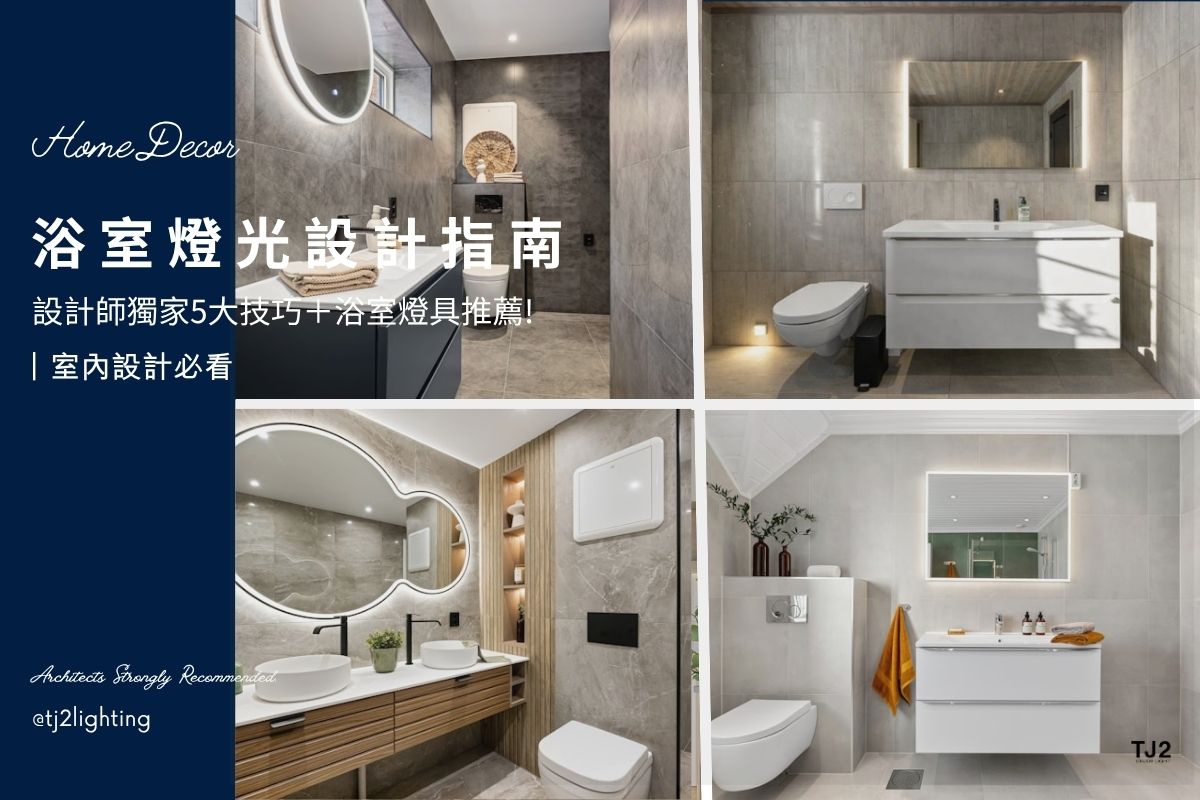
Bathrooms are spaces with high humidity and frequent usage. Therefore, in addition to aesthetics, interior lighting design must also prioritize safety, moisture resistance, and practical functional needs. The selection of indoor lighting fixtures must balance lighting performance and waterproof ratings to avoid safety issues after long-term usage.
For color temperature planning, it is recommended to use lighting between 3000K warm white light and 4000K natural light. This type of lighting can create balance across daily cleaning, grooming, and bathing scenarios while maintaining clear visibility of facial and body details.
For illuminance, bathroom foundational lighting is recommended to remain between 75–150 Lux to ensure basic safe brightness within the space. Mirror-front lighting is recommended to increase to approximately 300 Lux to avoid shadow issues during makeup application, shaving, or skincare routines, improving both comfort and accuracy during usage.
For indoor lighting fixture arrangements, foundational lighting can combine MINI-IP waterproof downlights as the primary lighting source. Functional lighting can use mirror-front downlights or indirect lighting strips behind mirrors to effectively reduce facial shadows. Atmosphere lighting can utilize ceiling indirect lighting or wall lights to increase spatial quality, allowing the bathroom to function not only as a practical space but also as a relaxing lifestyle environment.

浴室燈光設計,洗手台燈具這樣裝實用又超有質感! 室內設計
浴室燈光設計指南:設計師5大重點+燈具推薦,提升浴室照明質感
七、結論
What truly matters in interior lighting design is not simply making a space brighter, but using light to shape living rhythms and spatial layers. Different areas require different indoor lighting fixture arrangements and lighting strategies in order to truly achieve comfortable and functional interior design results.
Whether it is no main light design or main light design, there is fundamentally no absolute difference between good or bad. The true key lies in how designers create reasonable lighting plans according to spatial requirements, allowing light to genuinely integrate into everyday living. Once interior lighting design is fully understood, a space is no longer merely a place to live, but becomes a living environment that can truly be experienced and felt.
更多資訊:
室內燈光設計指南|建築大師燈光思維 & 6大室內燈具完整解析
照明設計全攻略:解析6大裝潢風格照明與燈具選購要點|室內設計
照明設計攻略:設計師私藏居家照明5大技巧,小預算打造居家高級感|室內設計
櫥櫃鋁條燈指南:5大櫥櫃照明重點+獨家鋁條燈推薦,打造質感居家空間
10大裝潢風格推薦|家具配置 × 燈具挑選 × 完整室內設計案例指南!
打造無印風室內設計:室內設計師推薦的居家照明與室內燈具選擇!
工業風室內設計|居家照明這樣規劃,室內設計師大推!
現代風室內設計|居家照明這樣規劃,連室內設計師都大推!
北歐風室內設計: 居家照明這樣設計超有感! 室內設計師都說讚
如有室內照明設計或室內燈具相關採購需求,歡迎透過以下管道聯繫我們:
● 官方網站: https://tj2lighting.com
● Whatsapp: +886 988147729
● 聯繫電話: +886 -4-25341768
● 電子郵件: sales@tj2lighting.com
● Line: @034wnuyy
| 室內燈具推薦
| 裝飾燈具推薦


| 相關文章
-
專業LED居家燈具製造與供應商 | 臥室照明設計/臥室燈具採購 | 商業照明 | 居家照明 | 照明設計實務 | 室內照明/室內燈具 | 專業LED室內燈具製造與供應商 | 客廳照明設計/客廳燈具採購
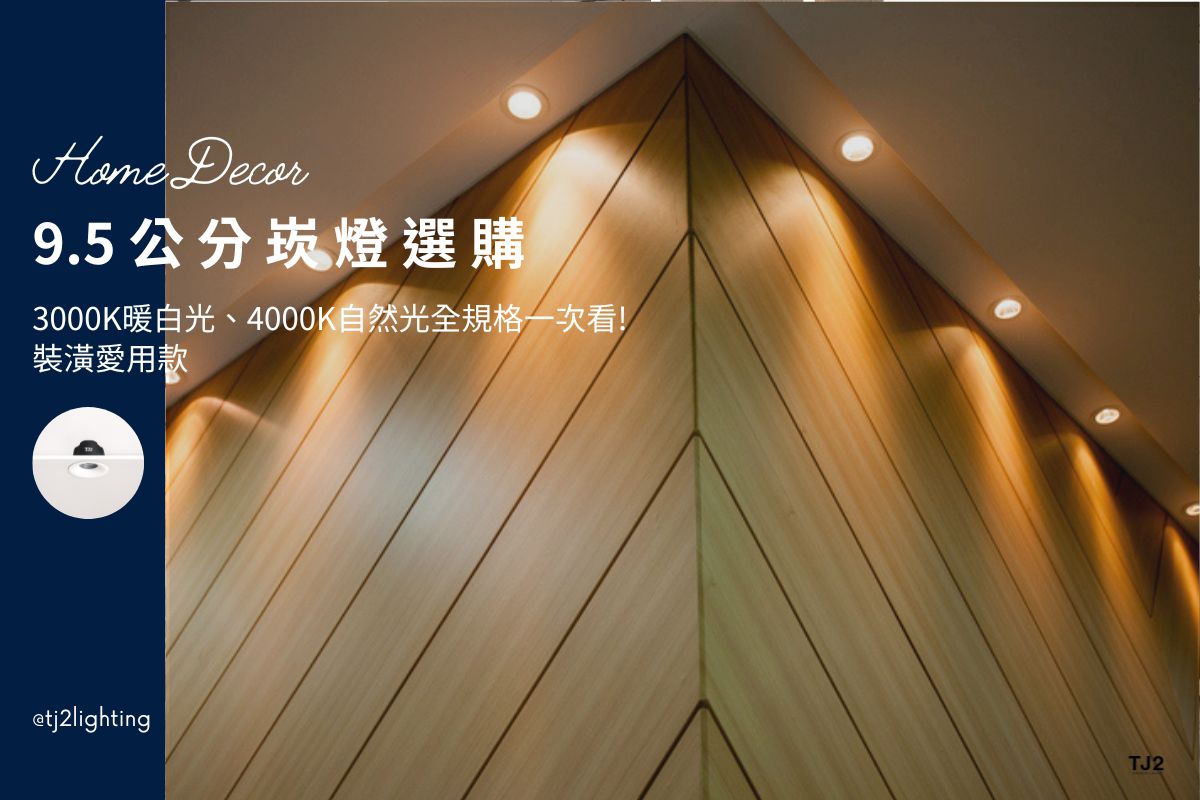
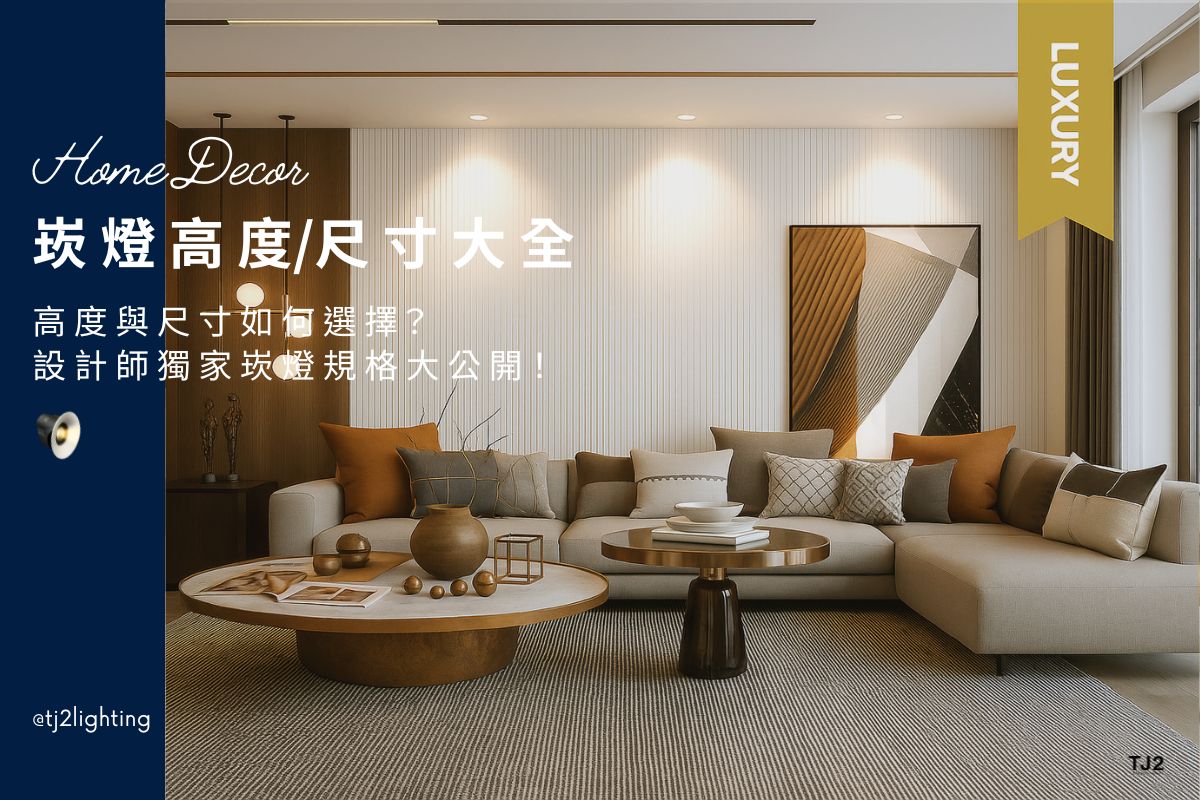
如何挑選崁燈高度與尺寸?設計師私藏燈具規格全解析
在當代空間規劃的範疇內,光與影的交織往往是決定設計質感的最終關鍵。當我們置身於專業人士規劃的場域時,常能體會到一種精緻且放鬆的氛圍,這背後其實包含了精密的光學計算與燈具篩選邏輯。在各類照明設備中,崁燈憑藉其簡潔、隱蔽且具備高度整合性的特點,成為了居家裝潢中最核心的照明方案。無論是需要營造溫潤感的客廳,或是要求高亮度視野的廚房,崁燈都能透過多樣的規格配置,精準達成不同空間的照明目的。崁燈高度、開孔尺寸以及額定瓦數這三大指標,不僅關乎光學表現,更直接影響天花板的施作工法與長期的居住安全。
-
室內照明/室內燈具 | 臥室照明設計/臥室燈具採購 | 商業照明 | 居家照明 | 照明設計實務 | 專業LED室內燈具製造與供應商 | LED 照明解決方案領導品牌 | 客廳照明設計/客廳燈具採購
燈具高度與尺寸如何選擇?設計師私藏的燈光規格一次看!
在室內設計的專業領域當中,燈光配置絕對不僅僅是為了提供基本的照明功能,它更是營造居家氛圍、突顯空間視覺層次、甚至能進一步影響居住者心理感受的靈魂角色。一套能被稱為成功的室內設計作品,其燈具的挑選流程、配置邏輯與最終的安裝規格,必然都經過了設計師極為精心的考量與計算。許多人在自行進行居家裝潢或軟裝佈置時,常會將視覺焦點過度放在燈具的外型設計或材質質感上,卻往往忽略了至關重要的燈具安裝高度與本體尺寸問題。本篇深度文章將完全從室內設計的專業實務角度出發,提供最詳盡的燈具高度與尺寸建議
-
裝潢風格案例/裝潢圖庫總覽 | 居家裝潢DIY/DIY裝修專案 | 居家照明 | 照明設計實務 | 室內照明/室內燈具 | 室內設計案例/室內裝修案例 | 北歐風室內設計案例/作品
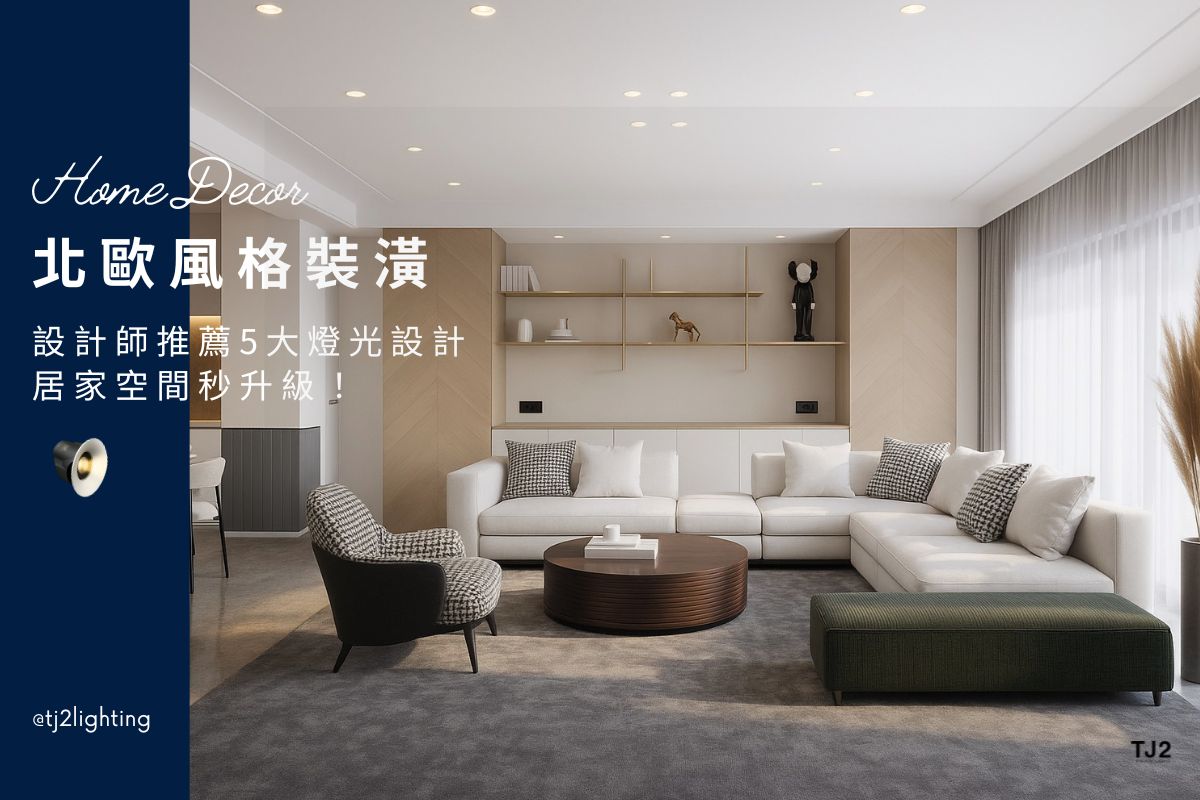
北歐風格裝潢|設計師推薦5大燈光設計技巧,居家空間秒升級!
北歐風格裝潢以「簡約、自然、舒適」聞名,近年來成為許多人心目中最理想的居家選擇。這種風格以純淨色彩、俐落線條與天然材質為基礎,營造出清新卻溫潤的生活氛圍。然而,許多在規劃北歐風居家的人,往往將重點放在家具挑選與軟裝搭配,卻忽略了燈光設計在其中的關鍵作用。即使選擇了再精緻的家具,如果缺少合宜的燈光襯托,整體氛圍也難以達到理想的效果。專業的室內設計師都知道,燈光設計並非只是單純的照明,它同時是塑造層次感、氛圍感與立體感的重要元素。透過妥善的燈光規劃,北歐風格裝潢能更具美感與舒適度,讓居住者在不同時間都能享受最佳的空間氛圍。
TJ2 Lighting 東捷生活科技 | LED照明解決方案領導品牌 | 照明設計公司 | 深耕台灣,逐鹿全球
TJ2 Lighting 專注於室內、商業和戶外照明,包含LED崁燈、吸頂筒燈、軌道燈、投射燈、壁燈、埋地燈/地底燈、戶外柱燈/庭園燈和LED光源模組等,提供多種樣式燈具以及客製化服務。TJ2 Lighting擁有一條龍的MIT產銷體系,能夠提供給客戶最及時、彈性的照明解決方案,以及優質的照明設計服務。
身為台灣LED照明解決方案領導品牌,團隊具有多年內銷、外銷經驗,與國內知名品牌業者、室內設計師均有合作,並致力於提供完整的照明產品與照明設計服務,以達到最大的客戶滿意。